Three Hyperscalers Shipped the Same Idea in One Week. Workspace Is the Control Plane.
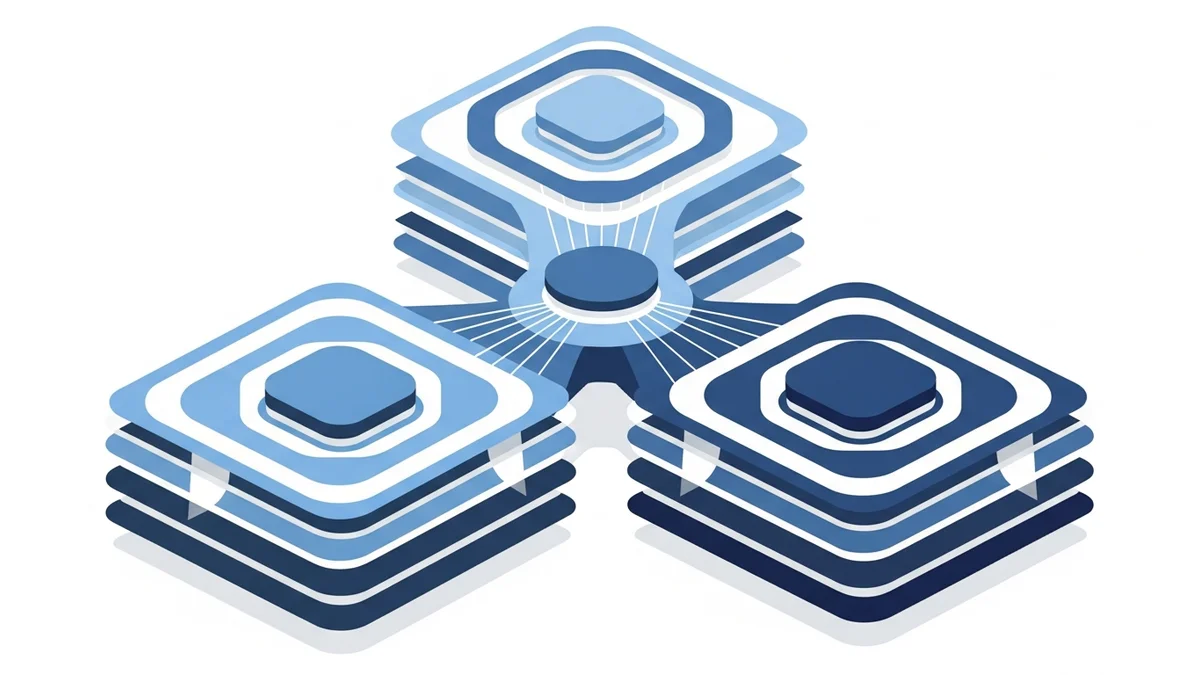
In one week of April 2026, three companies shipped the same idea.
Adobe announced CX Enterprise at its Summit on April 20: Brand Intelligence, Engagement Intelligence, and a new “CX Enterprise Coworker” that coordinates multiple agents against business objectives. Google Cloud introduced the Gemini Enterprise Agent Platform a few days later, framed as one place to build, scale, govern, and optimize agents. Around the same window, Google Workspace got a new “Intelligence” layer, a semantic substrate that stitches together email, chat, files, and projects so Gemini-powered agents share one view of work. And OpenAI began rolling out Workspace Agents, shared agents for teams powered by Codex, with admin controls over access, data, and approvals.
Three vendors. Three pitches. One architectural bet.
The bet is that the workspace, not the model, owns the governance surface.
Three pitches, one shape
It is worth looking at how each vendor framed its move, because the differences are interesting and the convergence is more interesting still.
Adobe’s pitch is customer experience. CX Enterprise is positioned as the layer where brand intelligence and engagement intelligence meet, with a multi-agent coordinator translating business goals into action sequences across Adobe’s surface. Adobe Experience Platform handles more than a trillion customer experiences a year, and Adobe’s own internal data shows AI-system traffic to U.S. retail sites up 269% year-over-year as of March 2026. The argument: your customers are already routing through agents, and the platform that sits closest to that traffic should own the orchestration.
Google’s pitch is context. Workspace Intelligence is a semantic layer over the artifacts a team already produces. The argument: an agent that does not see your inbox, your docs, your projects, and your chats is doing knowledge work blindfolded. Whoever owns that semantic layer owns the substrate.
OpenAI’s pitch is the team registry. Workspace Agents are shared, named entities that sit alongside humans in Slack and other tools, with admin controls and approvals around what they can do. The argument: agents are no longer one-off scripts. They are coworkers that need an org chart.
These pitches are not in direct competition yet. Adobe sells to CMOs. Google sells to CIOs and IT. OpenAI sells to whoever is paying for ChatGPT Enterprise. The product surfaces barely overlap.
But strip the marketing and the architecture is the same. Each vendor is laying claim to the layer where agents inherit context, identity, and audit. Each is making the workspace the control plane.
Four layers, two of them new
The conventional way to think about the agent stack has been bottom-up: pick a model, wrap it in an orchestrator, hand it tools. The decision that mattered was the model. Everything else was plumbing.
That mental model is now wrong. A more useful one looks like this.
Layer 4: Audit / admin / RBAC          ← workspace owns this
Layer 3: Workspace context / semantics ← workspace owns this
Layer 2: Orchestration / coordinator   ← platform vendor owns this
Layer 1: Model                          ← swappable
Layers 1 and 2 are familiar. Layer 1 is the model. Layer 2 is the loop that calls the model, runs tools, and manages state. Both are increasingly commoditized. Anthropic, OpenAI, Google, and Meta release competitive models on a quarterly cadence. Orchestration patterns are converging toward a small set of well-understood designs.
Layers 3 and 4 are the new ground.
Layer 3 is workspace context: the semantic graph of who works on what, which document is the latest draft, which Slack thread the contract was negotiated in, which campaign sent which email to which segment. An agent without this context produces plausible nonsense. An agent with it produces useful work.
Layer 4 is audit and administration: who approved this agent, what can it touch, what did it actually do, who owns the log. This is where regulators, security teams, and finance leaders will eventually live. As we argued in OpenAI Built Governance Into the Platform. That Is Not Enough., platform-level containment answers “what can the agent reach.” Layer 4 has to answer “what did the agent do, and who signs off on undoing it.”
Workspace vendors are racing to own Layers 3 and 4 because they are the layers that produce lock-in. A model can be swapped over a weekend. A semantic layer that has been ingesting your company’s work for two years cannot.
Why Adobe’s partner table is the loudest signal
The most-quoted line from Adobe’s announcement was the multi-agent coworker. The most important detail was the partner list.
Adobe shipped CX Enterprise with named integrations with AWS, Anthropic, Google Cloud, IBM, Microsoft, Nvidia, and OpenAI. Every major hyperscaler. Every major model lab. Adobe is telling its customers, in the only language enterprise software speaks fluently, that the model layer is interchangeable. Pick whichever one you want. The control plane stays at the workspace.
This is the inverse of the dominant 2025 narrative. Last year, the assumption was that your AI strategy was your model strategy: pick a frontier lab, build on top, accept the lock-in. Adobe’s partner table says the opposite. Your AI strategy is your workspace strategy. The model is a vendor decision you can revisit.
If Adobe is right, two things follow. First, the marketing argument among model labs about benchmark scores matters less than they think. Second, the marketing argument about workspace governance matters much more than buyers currently price it.
We saw a smaller version of this last month. As we noted in Marketing Agent Governance: What Klaviyo Composer Reveals, a marketing platform shipped governance controls alongside its agent because the function it serves cannot tolerate ungoverned autonomy. Klaviyo did it for one workflow. Adobe is now doing it for the whole CX surface, and Google and OpenAI are doing it for the whole work surface.
Marketing-grade governance versus engineering-grade
Read the press releases carefully and you will notice a pattern. The word “governance” appears in all of them. The specific controls do not.
Adobe says human oversight, governance, and auditability are key components, without disclosing the technical mechanisms. Google says the platform is for governing and optimizing agents, without specifying the audit log retention or the change-approval model. OpenAI says admin controls and safeguards manage access, data, and approvals, without committing to RBAC granularity or behavioral monitoring.
This is marketing-grade governance. It is not the same as engineering-grade governance, which is what your CISO and your auditor will want before they sign anything. The relationship between the two reminds me of Claude Managed Agents: When the Harness Becomes a Vendor Product. Vendors are racing to package the harness, the runtime, and the controls into something purchasable. The packaging arrived first. The accountable substance is still landing.
Treat vendor governance claims as a starting point, not as evidence. Insist on specifics: log retention windows, immutability guarantees, exportable audit formats, RBAC granularity, change-approval workflows, and incident response timelines. The vendors that answer those questions in writing will be a much smaller set than the vendors making the marketing claim.
The decision in front of CTOs
Most enterprises will buy a workspace-level agent platform in the second half of 2026. The pressure is already obvious. Pilots are turning into procurement. Boards are asking for AI strategy that is more than a model subscription. CFOs want to consolidate per-seat licenses.
Whoever wins that purchase decision wins the audit surface. They win the semantic layer. They win the place where agents get their identity and their permissions. The model the customer is excited about today will be replaced twice before the contract renews. The control plane will not.
This is the decision in front of CTOs right now, and it is not the decision they think they are making. They think they are choosing a productivity tool. They are choosing whose admin console their compliance team will live inside for the next five years.
Three questions to put on the evaluation matrix:
- Layer 3 ownership. Does the platform’s semantic context move with you if you switch vendors? If your two years of workspace context are stranded inside one vendor’s index, you do not own Layer 3. They do.
- Layer 4 portability. Can you export a complete, immutable audit log in a format your existing GRC stack consumes? “We have logs” is not an answer. “We have logs your auditor accepts” is.
- Model independence. Does the platform let you choose the model per task, per cost tier, per data residency requirement? Or is the model layer welded to the rest? Adobe’s answer is yes. Google’s is mostly yes. OpenAI’s is no.
These are not questions about features. They are questions about who holds the leverage in 2028.
What changed in seven days
Workspace as control plane is not a new idea. It is at least three years old in slideware.
What changed in seven days is that three of the largest enterprise software companies in the world shipped the same architecture and pointed it at the same buyer. That kind of convergence does not happen by accident. It happens when the market has decided that the productive surface for agents is the workspace, and the only open question is who owns it.
Buyers who treat the next twelve months as a productivity-tool selection will look back and realize they made a control-plane decision without knowing they were making one. Buyers who treat it as a control-plane selection from the start will negotiate harder, ask different questions, and end up with a shorter list of vendors and a much better contract.
The workspace is the control plane. Choose accordingly.
This analysis synthesizes Adobe’s Adobe Deploys Agents Across Customer Experience Tools (April 2026), Google Cloud’s Gemini Enterprise Agent Platform announcement (April 2026), and reporting from Testing Catalog on Google Workspace Intelligence (April 2026).
Victorino Group helps enterprises evaluate agent platform commitments before lock-in starts. Let’s talk.
All articles on The Thinking Wire are written with the assistance of Anthropic's Opus LLM. Each piece goes through multi-agent research to verify facts and surface contradictions, followed by human review and approval before publication. If you find any inaccurate information or wish to contact our editorial team, please reach out at editorial@victorinollc.com . About The Thinking Wire →
If this resonates, let's talk
We help companies implement AI without losing control.
Schedule a Conversation