OpenAI Built Governance Into the Platform. That Is Not Enough.
In March 2026, OpenAI published an engineering article describing how they equipped the Responses API with a full computer environment for AI agents. The article, written by Bo Xu, Danny Zhang, and Rohit Arunachalam, covers five capabilities: a Unix shell tool, an agent orchestration loop, native context compaction, a container filesystem with an egress proxy, and reusable agent skills.
Read together, these five pieces describe something more significant than any individual feature. OpenAI is building governance primitives directly into their platform infrastructure. Credential isolation, network allowlists, scoped permissions, context management. These are not add-ons. They are architectural decisions baked into how the platform runs agents.
This is good. It is also insufficient.
We have written about containment patterns and analyzed Codex’s agent loop in previous articles. This piece focuses on what is new in the EQUIP release and, more importantly, on the distance between platform-level controls and what enterprises actually need to govern AI agents in production.
Five Capabilities, One Architecture
A brief tour of what OpenAI shipped, focused on the governance implications rather than the feature descriptions.
Shell Tool. Models trained on GPT-5.2 and later can execute arbitrary Unix commands, not just Python. Go, Java, Node.js, curl, server processes. The model proposes a command, the API executes it in a sandboxed container, the result goes back to the model. This is a meaningful expansion of the attack surface, and OpenAI knows it. The container is the containment layer.
Agent Loop. The Responses API now orchestrates the full propose-execute-respond cycle server-side, including concurrent execution with multiplexed streaming. Bounded output caps prevent a single tool call from consuming the entire context window. This is infrastructure-level governance: the platform enforces resource limits the agent cannot override.
Compaction. This is the most technically interesting piece. Compaction is not summarization. It is a trained model capability that produces encrypted, token-efficient representations of conversation history. Available server-side (automatic) or via a /compact endpoint, it enables hours-long agent sessions without hitting context limits. As we noted in our Codex agent loop analysis, compaction through encrypted_content preserves latent understanding that text summaries would lose.
The trade-off is that compaction is lossy. OpenAI does not quantify the quality degradation over multiple compaction cycles. Research on context manipulation shows that conflicting context can drop o3 accuracy from 98.1% to 64.1%. For short sessions, compaction is elegant. For multi-hour agent runs with dozens of compaction cycles, the cumulative information loss is an open question.
Container Context. Each agent gets a filesystem for staging data (avoiding the anti-pattern of stuffing everything into the prompt), a SQLite instance for structured queries, and a sidecar egress proxy. The proxy deserves attention: it implements domain-scoped secret injection where the model sees placeholder values and real credentials are injected only at the network boundary for approved destinations.
This is the same pattern Docker implemented with their shell sandboxes, where a sentinel value gets swapped for the real API key at the proxy layer. The convergence is telling. Two independent implementations of “never let the agent see the real credential” suggests the pattern is becoming standard.
Agent Skills. Reusable SKILL.md bundles that define procedural knowledge: what tools to use, what steps to follow, what patterns to avoid. OpenAI aligned these with the open Agent Skills standard at agentskills.io, which has been adopted by over 30 tools including Claude Code, Codex, Cursor, VS Code, GitHub, Gemini CLI, Databricks, and Snowflake.
Skills are the most portable piece of this architecture. A SKILL.md file works across platforms. The runtime that executes it does not.
The Governance That Is There
Credit where it is due. OpenAI built several governance primitives that matter.
Two-layer network allowlists. Organization-level policies define which domains any agent can reach. Request-level policies narrow that further for specific tasks. This maps directly to what we described in The Cage Pattern: curating the attack surface by limiting what agents can see and reach.
Domain-scoped credential isolation. The egress proxy ensures that credentials are never in the agent’s environment. The model works with placeholders. Real secrets exist only at the boundary, injected for approved destinations. This is a genuine security improvement over approaches where agents handle raw API keys.
Bounded output caps. The platform enforces limits on how much output a single tool call can produce. This prevents a runaway shell command from consuming the entire context window, which is both a reliability feature and a cost governance mechanism.
Glean’s case study provides concrete data. Their skill routing initially caused a 20% drop in triggering. After adding negative examples to the skill definitions, their Salesforce skill accuracy went from 73% to 85%, and time-to-first-token dropped 18.1%. This is useful engineering data about how skills behave in production.
The Governance That Is Missing
Here is where the analysis gets uncomfortable for anyone planning to rely on platform-level controls alone.
No audit logging. The article describes what agents can and cannot access. It does not describe who reviews what agents actually did. In regulated industries, the ability to reconstruct an agent’s actions after the fact is not optional. “The agent ran inside a container with an allowlist” satisfies an architect. It does not satisfy an auditor.
No cost governance. Compaction enables hours-long agent sessions. Hours-long sessions consume tokens at scale. The article mentions no mechanisms for budget limits, cost alerts, or automatic session termination when spend exceeds a threshold. For organizations running hundreds of concurrent agent sessions, this is a real operational risk.
No approval workflows. The platform decides what domains are allowed and what credentials are available. But who approves changes to those lists? Who reviews when a new domain gets added to an allowlist? The governance of the governance is unaddressed.
No rollback mechanisms. If an agent with shell access writes files, modifies a database through SQLite, or makes API calls through the egress proxy, what happens when you need to undo those actions? Container ephemerality helps (destroy the container, lose the changes), but it does not help for actions that reached external systems through the proxy.
No multi-tenant isolation model. The article describes single-tenant containers. Enterprises running shared agent infrastructure need isolation between tenants, between projects, between environments. The allowlist model works for one agent. How it scales to a fleet is not discussed.
No behavioral monitoring. Allowlists define what an agent can reach. They do not detect anomalous patterns of access. An agent that is allowed to call a payments API and starts calling it 10,000 times per minute is operating within its permissions. Something is still wrong.
No input sanitization story. Shell access means the model generates commands that execute on a real system. The article does not discuss how the platform handles prompt injection that produces malicious shell commands. The container limits the blast radius. It does not prevent the detonation.
The Portability Trap
Skills are portable. Everything else is not.
A SKILL.md file is a markdown document. It runs anywhere that reads markdown. This is genuinely valuable and the open standard adoption (30+ tools) proves the market agrees.
But the runtime that makes skills useful is entirely platform-specific. The hosted container, the egress proxy with credential injection, the compaction system, the bounded output caps, the concurrent execution with multiplexed streaming. None of these work outside OpenAI’s infrastructure.
This creates a familiar pattern in platform economics. The portable layer (skills) attracts adoption. The non-portable layer (runtime) creates lock-in. Organizations that build their agent workflows around OpenAI’s container context will find that switching to another provider means rebuilding the execution environment, not just moving the skill files.
This is not necessarily wrong. Platform capabilities require platform investment. But organizations should make this choice consciously, understanding that “we adopted the open standard” and “we can easily switch providers” are different statements.
Local Execution Changes the Calculus
The article focuses entirely on hosted execution: agents running in OpenAI’s cloud containers. It does not address the growing category of local agent execution, where tools like Claude Code and Gemini CLI run on the developer’s own machine.
Local execution offers different security tradeoffs. The credential isolation problem is simpler (credentials are in the developer’s environment, managed by their existing tooling). The network governance problem is harder (no centralized egress proxy). The audit problem is much harder (no centralized logging by default).
For enterprise teams, the choice between hosted and local execution is a governance decision, not a feature preference. Hosted execution gives you centralized control at the cost of vendor dependency. Local execution gives you flexibility at the cost of distributed governance.
Most organizations will run both. The governance architecture needs to account for that heterogeneity.
What This Means for Enterprises
OpenAI building governance into the platform validates the thesis that governance is infrastructure, not an afterthought. The specific controls they chose (containment, credential isolation, network scoping, resource limits) align with what practitioners have been building independently. The convergence is real.
The mistake would be treating platform governance as complete governance.
Platform controls handle containment. They answer: “What can this agent access?” This is necessary. Enterprises also need to answer: “What did this agent do? How much did it cost? Who approved the change? Can we undo it? Is the pattern of behavior normal? Are we compliant with our regulatory obligations?”
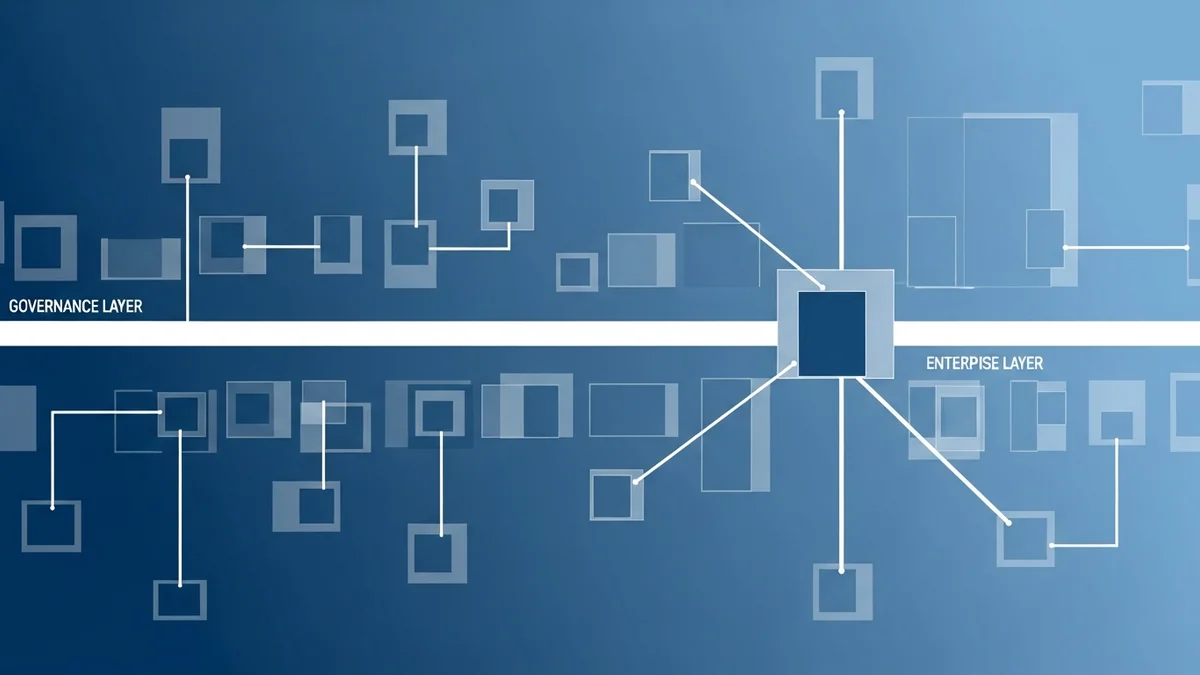
Those questions require a governance layer that sits above any single platform. It spans OpenAI’s hosted containers, local CLI tools, other providers’ agent runtimes, and the custom orchestration that most enterprises will inevitably build.
Three practical steps for teams evaluating the EQUIP capabilities:
Map the controls to your requirements. Take your existing security and compliance requirements. Check each one against what the platform provides. The items that remain unchecked are your governance engineering backlog.
Design for multi-platform from the start. Adopt skills (the portable layer) aggressively. Build the runtime integration (the non-portable layer) behind abstractions that let you swap implementations.
Invest in the layer above the platform. Audit logging, cost governance, approval workflows, behavioral monitoring, rollback procedures. These capabilities do not come from any single vendor. They are your responsibility, and they are where the real governance work lives.
The Real Product Announcement
Strip away the engineering details and the EQUIP article reveals something significant about market direction. The major AI platforms are competing on governance capabilities, not just model performance. OpenAI is betting that enterprises will choose the platform that makes agents governable, not just capable.
They are probably right about the market direction. They are building real controls that solve real problems. The containment primitives are sound. The credential isolation is well-designed. The compaction system is technically impressive.
And none of it replaces the organizational work of deciding what your agents should be allowed to do, monitoring whether they are doing it, and responding when they are not. Platform governance is a foundation. Enterprise governance is the building. You need both.
This analysis synthesizes “From Model to Agent: Equipping the Responses API with a Computer Environment” by Bo Xu, Danny Zhang, and Rohit Arunachalam (OpenAI, March 2026), the Agent Skills open standard specification, and research on context manipulation effects on reasoning model accuracy.
Victorino Group helps organizations build the governance layer that sits above any single AI platform, bridging containment primitives and enterprise compliance requirements. Let’s talk.
All articles on The Thinking Wire are written with the assistance of Anthropic's Opus LLM. Each piece goes through multi-agent research to verify facts and surface contradictions, followed by human review and approval before publication. If you find any inaccurate information or wish to contact our editorial team, please reach out at editorial@victorinollc.com . About The Thinking Wire →
If this resonates, let's talk
We help companies implement AI without losing control.
Schedule a Conversation