High Reasoning Cites a Different Web. Your AI Visibility Just Bifurcated.
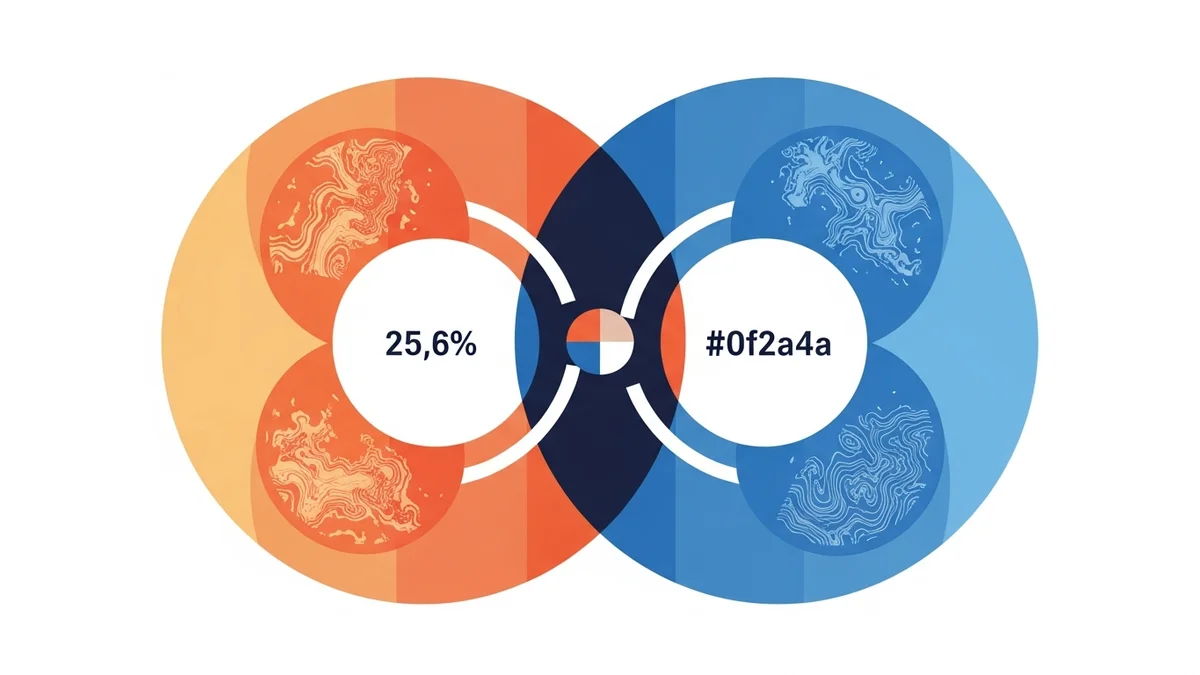
Kevin Indig ran 100 prompts across 20 buyer journeys and four verticals through GPT 5.2 at two reasoning settings: minimal and high. The data, published in his May 2026 Growth Memo essay “Reasoning Lift: What Happens to AI Visibility When AI Thinks Harder”, should reframe how marketing and growth teams think about AI search measurement.
The headline result is not that high reasoning cites more sources. That part was expected. The headline result is that high reasoning cites a different web.
Only 25.6% of cited domains overlap between the two modes. Ninety-nine domains appear exclusively when reasoning is turned up. Fan-out internal searches multiply 4.6x. Citation rates climb from 50% to 68%. Average sources per response move from 2.6 to 4.5.
Same model. Same prompts. Two different information markets.
The bifurcation is operational, not academic
Most AI visibility tools today aggregate. They run prompts, collect citations, and report a single number: share of voice, citation rate, presence index. That aggregation made sense when LLM responses were structurally similar. It stops making sense the moment the same model behaves like two different search systems depending on a runtime parameter.
Indig’s data forces the question: which version of GPT 5.2 are your customers actually using? If half your buyers run minimal reasoning queries (fast, cheap, default in many product surfaces) and the other half run high reasoning queries (slower, deeper, increasingly the default for considered purchases), then a single visibility metric is the average of two populations that may not even share the same shortlist of brands.
Averaging across them is not measurement. It is camouflage.
Where the bifurcation hits hardest
The fan-out behavior is the mechanism. Under minimal reasoning, GPT 5.2 averages a handful of internal searches before responding. Under high reasoning, it averages 4.6x more. The compounding effect shows up most dramatically in the middle and late funnel.
Comparison-stage queries go from 5.5 fan-out searches (minimal) to 24 (high). Selection-stage queries go from 2.6 to 15.4. These are exactly the buyer journey stages where brand citation matters most: when someone is shortlisting vendors, when someone is making a final decision.
The implication: brands optimized for early-funnel awareness queries may look fine in aggregate visibility dashboards while being completely absent from the citation set that high-reasoning users see during evaluation. The decision-stage market is the one that converts. It is also the one most likely to be hidden by averaging.
Why this is not “just another vertical pattern”
Some AI visibility writers will pattern-match this to existing vertical variance findings. That pattern-match is wrong.
Vertical variance says that different industries get cited differently. That is true and we have written about it. Reasoning-mode bifurcation says something stranger: within the same vertical, within the same prompt, within the same model, the source pool can be almost completely different depending on a single runtime knob. The variance is not between markets. It is inside the same market.
This is also not the same problem as platform coupling (which platforms cite which sources) or the fan-out gap (the 27% rank-on-Google gap for fan-out queries we covered in ChatGPT’s fan-out blind spot). Those problems exist between systems. Reasoning bifurcation exists inside one.
What aggregate dashboards are quietly hiding
If you currently report any of the following as single numbers, you are now reporting an average of two populations:
- Share of voice across AI assistants
- Citation rate per brand
- Domain authority score for AI search
- Competitor presence in answer text
- Topic coverage by query category
None of these are wrong. They are incomplete. The same brand can have 70% citation rate under minimal reasoning and 30% under high reasoning, or the inverse, and the reported average tells you nothing actionable.
Indig’s methodology used Semrush’s AI Visibility Toolkit API to run paired prompts at each reasoning setting. That paired design is the discipline the rest of the market has not adopted. Until it does, most dashboards are measuring a phantom average.
The new governance unit
We have argued before that AEO is already commoditized and that the real KPIs for AI search require treating visibility as a measurement discipline rather than a metric. The Indig data extends that argument.
Reasoning mode is now a governance dimension. Treating “AI visibility” as a single object is the equivalent of treating “search visibility” as a single object back when desktop and mobile diverged. The teams that broke out desktop versus mobile metrics in 2014 saw real signal. The teams that kept aggregating saw noise.
Same arc, faster timeline. The teams that segment by reasoning mode in 2026 will see what their competitors miss.
Do this now
Three concrete moves for marketing and growth leaders this quarter:
Re-run your top 20 priority prompts at both reasoning settings and compare cited domains. Not citation counts. Cited domain sets. If your overlap is below 50%, your aggregate dashboard is averaging two markets. You need two dashboards.
Segment your AI visibility KPIs by reasoning intensity, not just by assistant. Reporting ChatGPT versus Perplexity versus Gemini is table stakes. The next layer is reporting low-reasoning versus high-reasoning citation pools within each assistant. The fan-out delta is where the decision-stage signal lives.
Audit your shortlist presence at the selection stage under high reasoning. This is the conversion-adjacent layer. If you appear in 15.4 fan-out searches during selection and your competitor appears in 24, you are losing the consideration set before the buyer ever talks to sales. Selection-stage high-reasoning shortlist presence is the closest leading indicator of AI-search-driven pipeline that exists today.
The brands that govern these two markets as two markets will compound. The brands that keep averaging will keep wondering why their dashboards say one thing and their pipeline says another.
This analysis synthesizes Reasoning Lift: What Happens to AI Visibility When AI Thinks Harder (Growth Memo by Kevin Indig, May 2026).
Victorino Group helps marketing and growth teams govern AI search visibility as a measurement discipline, not a metric. Let’s talk.
All articles on The Thinking Wire are written with the assistance of Anthropic's Opus LLM. Each piece goes through multi-agent research to verify facts and surface contradictions, followed by human review and approval before publication. If you find any inaccurate information or wish to contact our editorial team, please reach out at editorial@victorinollc.com . About The Thinking Wire →
If this resonates, let's talk
We help companies implement AI without losing control.
Schedule a Conversation