OpenAI Shipped Multi-Layer Provenance. The PhotoDNA Precedent Says Verify First.
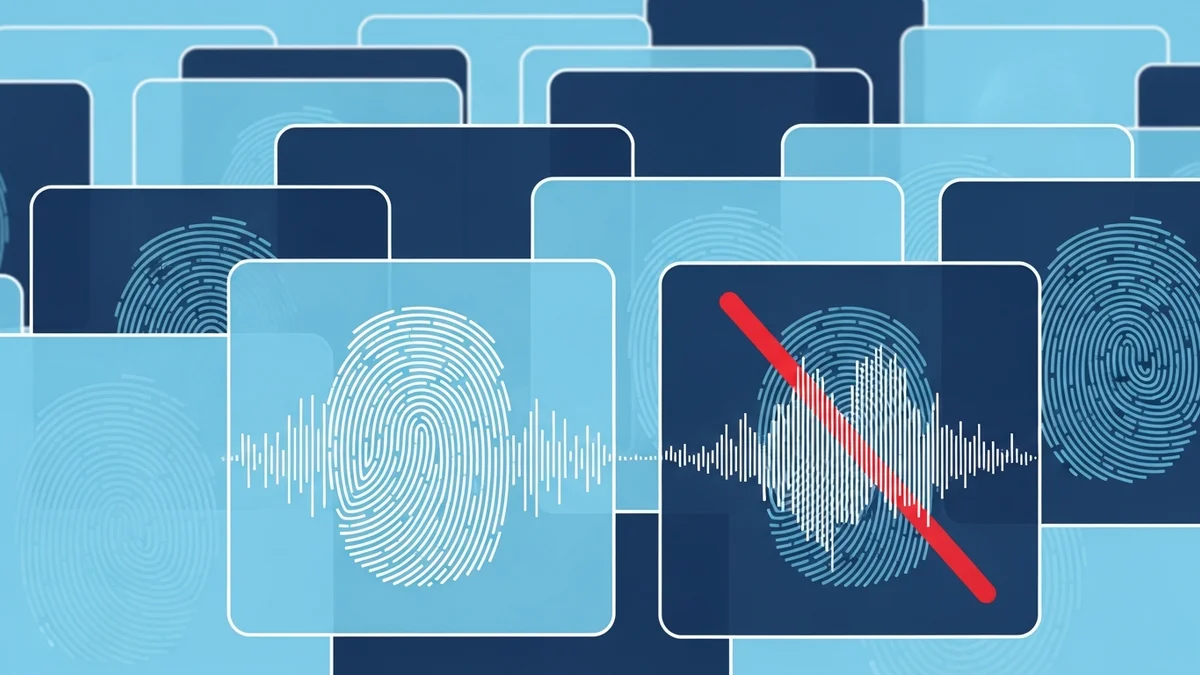
This week OpenAI announced that image outputs from ChatGPT, Codex, and the OpenAI API will carry a multi-layer content provenance stack: C2PA cryptographic metadata, SynthID invisible watermarks from Google DeepMind, and a public verifier at openai.com/verify. Sora and Voice Engine already had watermarks. OpenAI joined the C2PA Steering Committee in 2024, and DALL-E 3 was its first product to ship Content Credentials. The new piece is the combination, plus a verifier anyone can open in a browser.
The architecture is right. Multi-layer because no single signal survives every workflow. C2PA metadata is rich but easy to strip on screenshot or re-encode. SynthID is harder to strip but lower bandwidth and probabilistic at the boundary. Together they give you complementary failure modes instead of a single point of trust.
The instinct to publish a verifier is also right. Provenance that only the issuer can check is not provenance; it is a press release. Putting openai.com/verify in front of a public preview is the move that turns this from a feature ship into an audit primitive.
What deserves more attention is the next step: the verification work that begins the moment a provenance system ships. There is a precedent for what happens when an industry treats a content-fingerprinting system as if its claims are self-evidently true. The precedent is PhotoDNA.
The PhotoDNA Precedent
PhotoDNA, built by Microsoft and Hany Farid in 2009, is the hash-based system Google, Facebook, Twitter, and others use to detect known child sexual abuse material at scale. For more than a decade the public-facing claim about PhotoDNA, on Microsoft’s own page, was that “a PhotoDNA hash is not reversible.” That sentence let platform legal teams say the hash database was a one-way artifact, safe to share, safe to query, safe to centralize.
In December 2021, Anish Athalye published Inverting PhotoDNA. His tool, Ribosome, reconstructs thumbnail-quality images from PhotoDNA hashes. The output is grainy and small, but it is recognizable. The hash carries enough structure that a modest neural network, trained on a few hundred thousand hash-image pairs, learns to undo the mapping.
The Athalye result did not collapse PhotoDNA as a system. It did force a reframe. “Not reversible” became “not trivially reversible,” then “reversible to thumbnail quality with available compute,” then “this is now a confidentiality consideration that legal and ops have to design around.” The hash database became something you protect rather than something you publish. The audit posture changed because someone treated the irreversibility claim as a hypothesis instead of a verdict.
That is the precedent. The cost of the verification work was one researcher, one paper, a year of compute access. The cost of not doing it would have compounded for another decade.
Provenance Is an Output-Side Primitive, Not an Input-Side Story
The Victorino writing on AI governance so far has lived mostly on the input side. We have written about why the cognitive dark forest reframes knowledge governance when LLMs train on public text. We have written about training data as the lever Anthropic is using to position itself in the trust market. We have written about the verification debt every AI program carries when it ships output that no human reviewed.
Provenance sits in a different layer. It does not govern what went into the model. It governs what comes out, and what an auditor can prove about that output six months later. Three properties matter for enterprise design:
Provenance is a claim, not a fact. A C2PA manifest says “this artifact was produced by this issuer at this time under these parameters.” It is signed. Signatures verify that the manifest came from the issuer; they do not verify that the manifest’s claims about the artifact are complete. A SynthID watermark is a probabilistic signal that the artifact carries an embedded pattern; the strength of that signal is a property of the encoder, the decoder, and every transformation in between.
Provenance survives only the transformations the designers modeled. C2PA was designed to survive lossy compression and limited cropping. SynthID was designed to survive screenshots and resizing. Adversarial transformations (generative inpainting, style transfer, deliberate adversarial noise) are different categories. The honest framing inside an enterprise: the provenance signal is a Bayesian update on origin, not a binary verdict.
The verifier is part of the trust surface. openai.com/verify is the third-party tool that closes the loop. If the verifier is unavailable, mis-configured, or has its own confidence thresholds tuned without disclosure, the enterprise that depends on it inherits that operational risk. Provenance verification is now a vendor-managed service that your compliance program quietly depends on.
What Enterprises Should Actually Do This Week
Block thirty minutes with whoever owns AI output governance. Ask four questions.
Which of our AI outputs carry provenance today, and which do not? Sora content, OpenAI image outputs, and ChatGPT image generations now do, on the issuer side. Outputs from other vendors, from in-house models, from fine-tuned variants, and from any post-processing pipeline you run on top of OpenAI artifacts may not. Build the inventory before you build the policy.
What does our provenance chain actually preserve through our own pipeline? Take one production output. Trace it through your storage, your CMS, your CDN, your marketing automation, your analytics tagging. At which point does C2PA metadata get stripped? At which point does SynthID get re-encoded into oblivion? Every transformation is a potential signal-loss boundary. Most enterprises will find that their own infrastructure removes the provenance before the output reaches a downstream consumer.
Who has tried to break it? Treat the OpenAI announcement the way the security industry treated the PhotoDNA “not reversible” claim. The interesting question is not whether the system works as advertised in the demo. The interesting question is what an adversarial researcher with six months and modest compute can demonstrate about its limits. Read the C2PA threat model. Read what is published about SynthID’s robustness against deliberate attacks. If you cannot find independent red-team work yet, plan for it to appear. Plan for what your posture will be when it does.
What is the verification SLA we depend on? If your trust chain assumes openai.com/verify is reachable and accurate, that is now a dependency in your audit story. Document it. Negotiate it. Consider whether parallel verification (running an open verifier where one exists, retaining raw assets, logging hash chains independently) belongs in your architecture.
The Discipline That Compounds
Output provenance is a real primitive. Multi-layer is the correct design choice. Public verification is the correct operational choice. The mistake is not to deploy provenance; the mistake is to treat its arrival as the end of the verification work.
The teams that handled PhotoDNA well between 2009 and 2021 were the ones who kept asking what the system could not do, not the ones who assumed the marketing copy was the threat model. The teams that will handle the OpenAI provenance stack well between 2026 and 2034 will be the ones who ask the same question now, before the inversion paper exists, before the failure modes are documented, before the legal team needs an answer.
The architecture has shipped. The audit has not.
This analysis synthesizes Advancing content provenance with C2PA and SynthID (OpenAI, May 2026) and Inverting PhotoDNA (Anish Athalye, December 2021).
Victorino Group helps enterprises design output-provenance and verification architectures that survive audit. Let’s talk.
All articles on The Thinking Wire are written with the assistance of Anthropic's Opus LLM. Each piece goes through multi-agent research to verify facts and surface contradictions, followed by human review and approval before publication. If you find any inaccurate information or wish to contact our editorial team, please reach out at editorial@victorinollc.com . About The Thinking Wire →
If this resonates, let's talk
We help companies implement AI without losing control.
Schedule a Conversation