Platform Coupling: Why AI Cites What It Owns, Not What You Publish
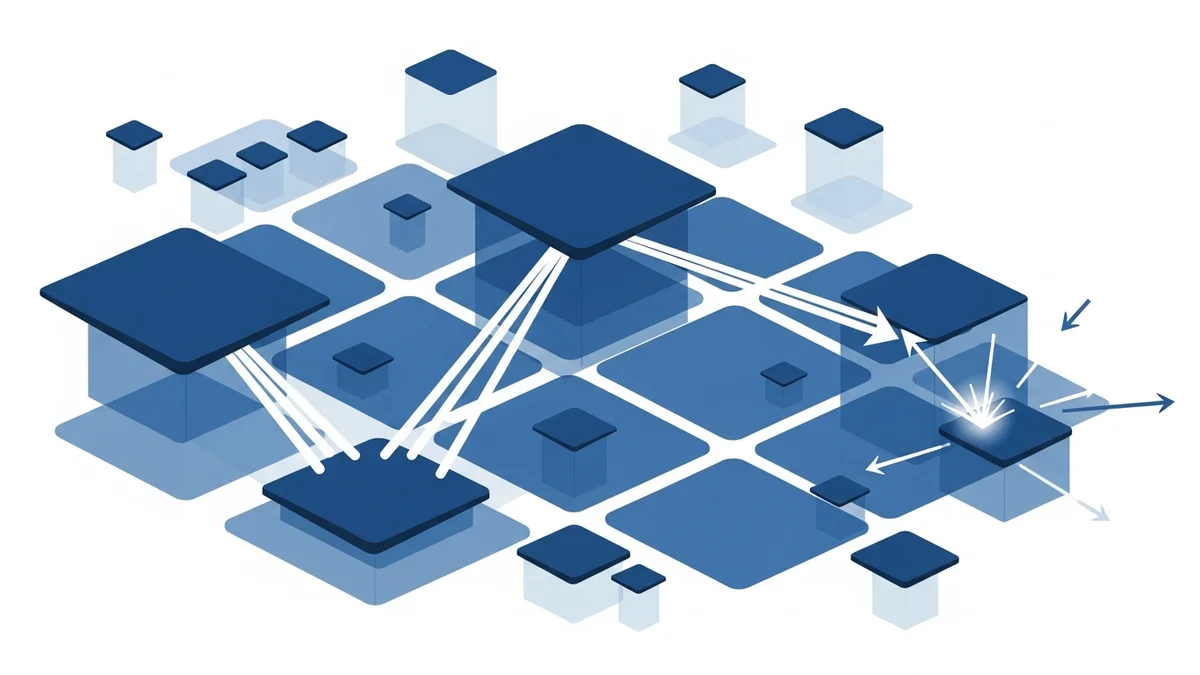
Your content could be the most authoritative source on a topic, and the AI model answering your customer’s question might never see it. Not because the content is weak. Because the model does not have a licensing deal with the platform where you published it.
This is platform coupling. And 45.2 million citations prove it is already the dominant force shaping what AI search surfaces.
The Data: 45.2 Million Citations, 10 AI Surfaces
Research from NoGood’s Goodie AI team, led by Mostafa ElBermawy, tracked 45.2 million total citations and 1.8 million social citations across 10 AI search surfaces from September 2025 through February 2026. The coupling patterns are not subtle. They are structural.
Grok and X: 99.7% of all X (formerly Twitter) citations come from Grok. Exclusively. No other AI model meaningfully cites X content. Grok is owned by xAI, which is owned by Elon Musk. X is owned by Elon Musk. The citation pipeline is a closed loop.
Perplexity and YouTube: 97.4% of Perplexity’s social citations come from YouTube Long Video. This is not because YouTube produces the best answers. It is because Perplexity has a licensing relationship with the platform.
Gemini: 74.7% YouTube, 18.7% Reddit. Google owns YouTube. The citation behavior reflects the ownership structure.
ChatGPT: 59.5% Reddit, 19.8% LinkedIn. OpenAI has a ~$70M/year data licensing deal with Reddit. ChatGPT’s YouTube citation share? Only 5.6%. No ownership tie, no citation volume.
DeepSeek: 57.3% LinkedIn, 33.3% Reddit. Different deal structure, different citation distribution.
Claude: 27.8% Medium, 18.2% TikTok Profile. The most distributed citation pattern among major models, but still shaped by access rather than quality.
As ElBermawy puts it: “When it comes to the AI search landscape, there is no ‘even playing field.’ Like any industry with big investments, it’s all shaped by deals.”
Litigation as Citation Control
The most revealing data point is not a coupling ratio. It is what happens when a deal breaks.
In October 2025, Reddit sued Perplexity for unauthorized use of Reddit content. The litigation impact was immediate and measurable: Perplexity’s Reddit citations dropped 86% overnight. YouTube citations on Perplexity jumped from 51.98% to 95.25% to fill the gap.
One lawsuit reshaped an entire model’s citation landscape in a day. Content quality did not change. The legal relationship did.
This is the mechanism. Commercial agreements and intellectual property disputes are now the primary variables determining whether AI models surface your content. Not E-E-A-T. Not domain authority. Not content depth. Access.
Why This Matters for Governance
We have been building toward this conclusion across multiple analyses. We mapped how AI decides what to quote and found citation behavior follows patterns distinct from traditional search. We showed that only 27% of ChatGPT citations rank on Google’s first page, proving these are genuinely different discovery systems. We documented that there is no universal AI citation formula — patterns vary by vertical and model.
Platform coupling explains the underlying mechanism. The reason citation patterns differ from Google, the reason they vary by model, the reason there is no universal formula — it is because commercial relationships, not content signals, are the primary driver.
This has direct governance implications for any organization investing in content:
Your content strategy needs a distribution layer, not just a quality layer. Publishing great content on your own domain is necessary but not sufficient. If the AI models your audience uses cannot access your content through their licensing agreements, that content does not exist in the AI search landscape. ElBermawy’s framing is precise: “In AI search, it doesn’t matter what you publish if the model can’t access it.”
Platform risk is now citation risk. If your content strategy depends heavily on one platform (LinkedIn, Reddit, YouTube), your AI visibility is coupled to whichever models have deals with that platform. A licensing dispute or deal expiration can eliminate your AI citation presence overnight, as the Reddit-Perplexity litigation demonstrated.
Model diversification is a content governance concern. Different models cite different platforms. If your audience uses ChatGPT, Reddit presence matters. If they use Gemini, YouTube matters. If they use Perplexity, YouTube Long Video matters disproportionately. Governing your content presence requires understanding which models your audience uses and which platforms those models can access.
The Deal Values Tell the Story
The financial scale of these arrangements confirms this is not incidental:
- OpenAI-Reddit: ~$70M/year
- Google-Reddit: ~$60M/year
- Perplexity-Snapchat: ~$400M/year
These are not API fees. They are licensing deals that determine the information substrate each model draws from. The citation patterns follow the money because the citation patterns follow the access, and the access follows the money.
What Organizations Should Do
Platform coupling is not going away. It is the business model of AI search. But organizations can govern around it:
Audit your platform exposure. Map where your critical content lives against the coupling matrix. If 80% of your content is on LinkedIn and your audience primarily uses Gemini (74.7% YouTube), you have a structural visibility gap.
Diversify distribution deliberately. This is not “post everywhere.” It is strategic placement on platforms that have licensing relationships with the AI models your audience uses. That requires knowing which models your audience uses — which most organizations do not currently track.
Monitor citation patterns, not just traffic. Traditional analytics tell you who visited your site. AI citation monitoring tells you whether your content exists in the AI information layer at all. These are different questions with different governance implications.
Treat platform deals as market intelligence. When a major licensing deal is announced (or a lawsuit filed), it will shift citation patterns. Organizations that track these shifts can adapt distribution before competitors notice the change.
The uncomfortable truth is that content quality alone has never fully determined discovery. Google’s algorithm was always a mediation layer. But the AI search layer is more explicitly commercial than web search ever was. The coupling between ownership, licensing, and citation is measurable, predictable, and — for organizations that understand it — governable.
This analysis is based on NoGood’s Goodie AI platform coupling research (Mostafa ElBermawy, March 2026), tracking 45.2 million citations across 10 AI search surfaces from September 2025 through February 2026.
Victorino Group helps organizations govern their AI visibility — from citation analysis to distribution strategy. Let’s talk.
All articles on The Thinking Wire are written with the assistance of Anthropic's Opus LLM. Each piece goes through multi-agent research to verify facts and surface contradictions, followed by human review and approval before publication. If you find any inaccurate information or wish to contact our editorial team, please reach out at editorial@victorinollc.com . About The Thinking Wire →
If this resonates, let's talk
We help companies implement AI without losing control.
Schedule a Conversation