Netflix's INKubator Is Creative Governance's First Studio-Scale Anchor
The most interesting AI governance story of the week is hiding inside Netflix job listings.
In March 2026, Netflix quietly stood up a new internal unit called INKubator (often shortened to INK). The Verge surfaced it on May 14 through Janko Roettgers’ Lowpass column, and the deck almost reads like marketing copy: a “next-generation, creative-led, GenAI-native animation studio” chasing “feature-quality content.” The leadership signal is real, not theatrical. Serrena Iyer, formerly of DreamWorks Animation, MRC Studios, and A24 Films, is running the unit. This is not an R&D petri dish staffed with three researchers and a Notion page. This is studio bench depth.
The line that actually deserves attention is buried in the head-of-technology posting. The role calls for “GenAI-enabled workflows, artist tooling, and scalable, secure multi-show environments.” Five words in that phrase do the heavy lifting: scalable, secure, multi-show, environments. None of them are creative words. All of them are governance words. And they are being written into the architecture of a feature animation studio before the first frame ships.
That is what makes INKubator different from every other generative-AI-in-Hollywood story of the last eighteen months. The earlier wave was experimental: shorts, sizzle reels, post-production startups acquired for cheap. Netflix bought InterPositive (Ben Affleck’s post-production AI shop) along that earlier wave. INKubator is the next move. It is the move from “let’s try this on a side project” to “let’s build the institution that does this at studio cadence.”
What Creative Governance Actually Means
Most AI governance writing assumes the governed surface is software: models, prompts, agents, tools. That framing breaks the moment you walk into a feature animation pipeline.
A studio has a different governed surface. Talent contracts that specify who can use which actor’s likeness for which purpose. Union rules (WGA, SAG-AFTRA, IATSE) that constrain how generative tooling can touch a frame before residuals and credits trigger. IP chains where every visual element has a provenance trail. Quality controls where a single shot can hold up a release. Insurance and E&O coverage that depend on auditable creative decisions. These are not policy documents on a shared drive. At studio scale, they are runtime constraints.
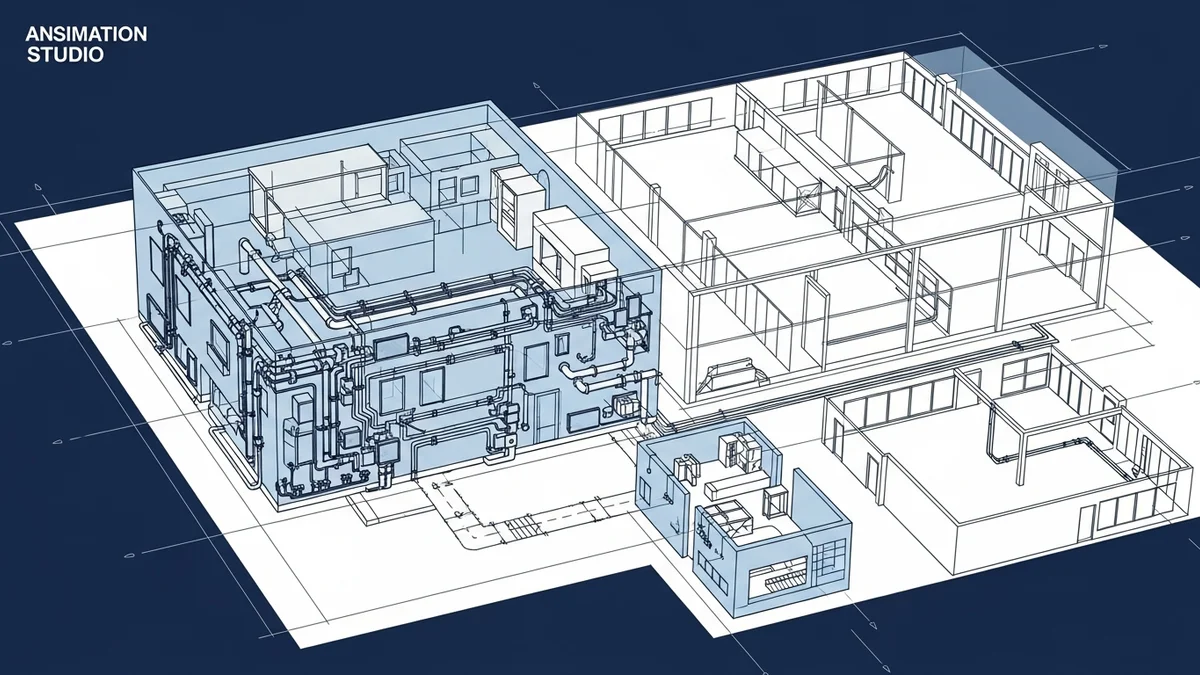
When the head-of-technology listing says “scalable, secure, multi-show environments,” that is the architectural commitment to making those constraints enforceable in production. Multi-show means the same artist tooling has to serve a kids’ series and an adult feature without leaking assets between them. Secure means model weights, training data, and intermediate outputs cannot drift into the wrong project or the open internet. Scalable means the governance layer cannot be a single ops engineer answering Jira tickets.
This is the move I was waiting for. Software companies have spent two years building agent governance. The studios have spent two years experimenting with generative tools. INKubator is the first time a top-tier studio has committed to building the institutional substrate underneath those experiments.
Why This Is the Cross-Domain Signal
We have argued before that Netflix is already the cleanest live-ops case study for AI fleets, and that design systems have quietly become governance infrastructure, with the same pattern now arriving in the agent era. INKubator extends that arc into a third domain.
The pattern is not “Netflix does AI well.” The pattern is that once a creative discipline starts operating with AI at production frequency, the governance layer migrates from documents to architecture. Live ops did this for streaming reliability. Design systems did this for component consistency. INKubator is doing this for animation IP.
This matters because creative governance has historically been the softest layer in any media company. Style guides, brand books, talent rules, union compliance. All of them lived as PDFs, training decks, and tribal knowledge. None of them were enforced at the file level. With INKubator’s posture, that changes. If artist tooling is built to be multi-show and secure from day one, then permissions, provenance, and approval flows stop being editorial culture and start being platform constraints.
For anyone outside Hollywood reading this, the analog is exact. Whatever your creative function (marketing, design, product, brand, customer education), the moment your team starts generating content with AI at real frequency, your governance layer faces the same migration. PDFs do not survive ten campaigns a week. Slack threads do not survive a brand crisis. Tribal knowledge does not survive the third agent fleet update.
What Netflix Is Almost Certainly Building
The Verge piece is honest about what it does not know. The Lowpass paywall holds most of the deep reporting and Netflix has not released a public architecture diagram. We should not invent details. But we can read the listings as a public-facing architecture spec.
A “multi-show environment” implies tenant isolation between productions, with shared model infrastructure and isolated data. A “secure” environment implies provenance tracking on every generated asset, auditable enough to defend in a guild grievance or an IP dispute. “Artist tooling” implies a UI layer that lets a director, a designer, or a layout artist work inside the same governance fabric without seeing it. “Scalable” implies the governance fabric has to absorb a roadmap of multiple shows in parallel, not a single hero project.
Put together, that is the architectural posture of a platform team, not a creative team. Netflix is hiring creative leadership and platform engineering as one institution. That is the institutional move that makes the rest possible.
The risk is what you do not see. Generative animation at studio scale has cost questions, talent questions, and union questions that no posture can fully resolve from a careers page. The unions in particular will read “GenAI-native” as a fighting word. How Netflix navigates the contract and credit questions will shape the next round of Hollywood labor negotiations. The architecture is necessary. It is not sufficient.
Do This Now
If you lead a creative function (marketing, design, product, brand, content) and your team is past the experimentation phase with AI, treat INKubator as your forcing function this quarter. Ask three questions and write down the answers before the end of the week.
First, what creative governance lives only in policy documents today? Style guides, brand rules, talent likeness rights, partner approvals, regulatory disclosures. List them. Then mark which ones get checked at file level versus reviewed at meeting level. The unmarked ones are your migration backlog.
Second, where does your tooling assume one team, one project, one model? If your generative stack cannot cleanly isolate two campaigns or two brands without manual discipline, you do not have a multi-show environment. You have a single-show environment with cross-contamination risk. Decide whether you fix that before the third agent goes live or after the first incident.
Third, who owns the institutional layer? In most companies, the answer today is no one. AI governance is split between IT security, legal, brand, and the team that happens to be using the tool. Netflix’s signal is that someone has to own the platform underneath the creative work. If that owner does not exist on your org chart, you are running on the same posture INKubator just abandoned.
The reason this signal matters is not that Netflix is doing it. It is that Netflix is doing it visibly, with credible leadership, at studio scale, with the governance vocabulary written into the job specs. That sets the reference architecture for every creative organization that operates downstream of Hollywood standards. The companies that read INKubator as a creative story will miss it. The companies that read it as an institutional one will build something durable before the next wave of generative tools forces them to.
This analysis synthesizes Netflix is building an AI animation studio (The Verge / Lowpass by Janko Roettgers, May 2026).
Victorino Group helps creative organizations institutionalize AI as governance infrastructure, not as a tooling experiment. Let’s talk.
All articles on The Thinking Wire are written with the assistance of Anthropic's Opus LLM. Each piece goes through multi-agent research to verify facts and surface contradictions, followed by human review and approval before publication. If you find any inaccurate information or wish to contact our editorial team, please reach out at editorial@victorinollc.com . About The Thinking Wire →
If this resonates, let's talk
We help companies implement AI without losing control.
Schedule a Conversation