What Netflix's Live-Ops Playbook Teaches About Operating Agent Fleets
In April 2026, the Netflix Tech Blog published a piece that should be required reading for anyone deploying AI agents at scale. It has nothing to do with AI.
It is about how Netflix went from running one live event per month in 2023 to more than 400 events per month in 2026. Along the way they streamed the World Baseball Classic Japan final to 17.9 million concurrent viewers. They call the system behind it the “human infrastructure.” That phrase is the whole essay.
Most reporting on live streaming focuses on the pipe: encoders, CDNs, origin servers, failover paths. Netflix’s point is quieter and more interesting. The technology scaled because the operations org scaled with it. Automation raised the stakes. Humans met the stakes with a new operating model.
That is the pattern AI leaders should be studying right now.
The Three Layers Netflix Built
Netflix did not solve live at scale with one big platform decision. They built three distinct operational layers, and each one maps to a muscle most AI organizations do not yet have.
Pre-event rehearsals. Before a major broadcast, Netflix runs end-to-end rehearsals of the entire stack plus the humans on call. Not just load tests. Full dress rehearsals where the on-call engineer, the incident commander, the content team, and the vendor integrations all exercise the runbook together. The point is not to prove the system works. The point is to find the seams between the system and the people who run it.
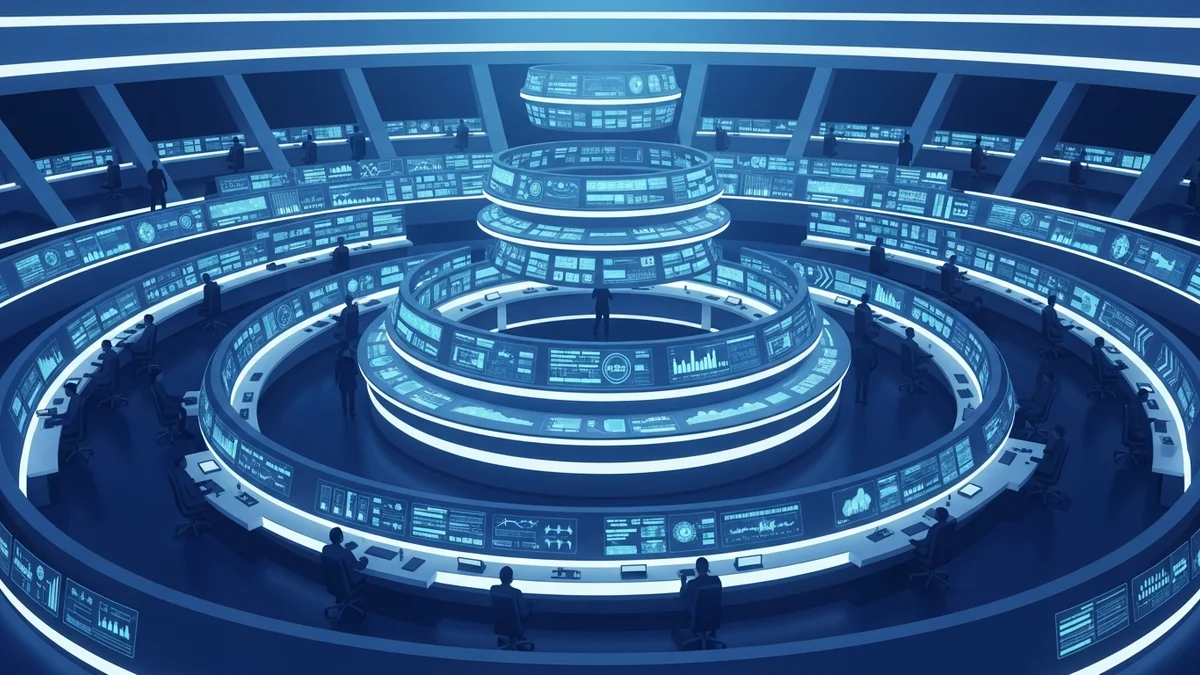
Live observability. During the event, Netflix does not just watch infrastructure metrics. They watch viewer experience, partner feeds, creative workflows, and social signal in the same room. The observability layer is explicitly designed for humans making decisions in seconds, not dashboards for post-hoc analysis. As we explored in The Governance Loop Hidden in Your Agent Monitoring, the shape of what you monitor is the shape of what you can govern.
Post-event triage as product. After the stream ends, the ops team runs a structured triage that feeds back into the next rehearsal. Incidents become runbooks. Near-misses become tests. The learning loop itself is a tracked product, not a nice-to-have.
None of this is glamorous. All of it is compounding.
Why This Should Worry AI Leaders
Most AI teams in 2026 are in Netflix’s 2023 position. They have shipped one or two agents to production. The monitoring is ad hoc. The on-call rotation is unclear. When something goes wrong, the response is a Slack thread and a promise to build a dashboard next quarter.
This works at one agent per month. It does not work at 400.
And 400 is coming faster than most leaders realize. The cost curve on agent deployment is collapsing. Every vertical SaaS is shipping agent features. Internal platforms are spawning agent fleets to handle tasks that used to be tickets. The inflection is not about whether to deploy more agents. It is about whether the operating model can absorb them.
The temptation is to solve this with more automation. Better evals. Smarter routing. Self-healing orchestration. All useful. None sufficient.
Netflix’s insight is that automation is not a replacement for human ops. It is a forcing function. The more the system can do on its own, the higher the stakes when it cannot, and the more the humans in the loop need to be prepared for the specific failure modes that matter.
Mapping the Three Layers to Agent Fleets
This is where we have to be careful. Netflix is an extreme case. Most companies will never run 400 concurrent agent workflows. The analogy is structural, not literal. But the structure is what transfers.
Pre-deployment rehearsals for agents. What does a dress rehearsal look like when the worker is an agent? It looks like an adversarial eval run against staging data, with the on-call engineer and the domain expert in the same room, watching the agent make decisions on realistic traffic. Not a notebook. Not a benchmark. A rehearsal. You find the seams between the agent, the tools it calls, and the human who will answer the page at 2am.
Most teams skip this. They ship to production and call the first week “a soft launch.” That is not a rehearsal. That is the event.
Live observability for agents. The agent equivalent of Netflix’s live room is a unified view of agent actions, tool calls, cost, latency, and business outcome, designed for a human making a decision in seconds. Most agent observability today is designed for post-hoc forensics. It answers “what happened yesterday,” not “should I intervene right now.” As we argued in From In-the-Loop to On-the-Loop, the shift from reviewing diffs to engineering systems requires a different kind of signal.
Post-incident triage as product. When an agent misbehaves in production, the failure should flow into the rehearsal set for the next release. This is not a wiki page. It is a pipeline. The Jira ticket becomes a regression test, becomes a scenario in the next adversarial eval, becomes a line in the runbook the on-call engineer reads during the next rehearsal.
The compounding effect is the product. Every incident makes the next one cheaper.
The Part Netflix Does Not Tell You
The blog post is a corporate success narrative. It is honest, but selective. Netflix does not publish the cost of this operation, the number of near-misses, or the incidents that did not go well. We should assume there are stories not told. The 400 events per month figure also mixes scales: a B-tier comedy special and a World Cup final are not the same live event.
None of this undermines the pattern. It just reminds us that the visible playbook is the result of many years of invisible investment. Teams that look at Netflix and try to copy the dashboard will fail. Teams that look at Netflix and copy the discipline will not.
The Question for Your Team
The hardest question for AI leaders right now is not which model to pick or which framework to standardize on. It is whether your operating model can absorb the next 10x of agent deployment without collapsing.
Three practical prompts:
- If an agent misbehaves in production tonight, who is paged, what runbook do they open, and how long until the learning flows back into your eval suite?
- When you ship your next agent, are you running a rehearsal or a soft launch? Be honest about the difference.
- What would your ops room look like during a live agent incident affecting a thousand customers? If the answer is “a Slack thread,” you have your answer.
Netflix’s real achievement is not that they can stream a baseball game to Japan. It is that they can do it 400 times a month without the operations team burning out. The human infrastructure is the product behind the product.
For anyone building agent fleets, that is the lesson worth importing. Not the tooling. The discipline.
This analysis synthesizes Netflix Tech Blog’s The Human Infrastructure: How Netflix Built the Operations Layer Behind Live at Scale (April 2026).
Victorino Group helps teams build the human operational layer for AI agent fleets. Let’s talk.
All articles on The Thinking Wire are written with the assistance of Anthropic's Opus LLM. Each piece goes through multi-agent research to verify facts and surface contradictions, followed by human review and approval before publication. If you find any inaccurate information or wish to contact our editorial team, please reach out at editorial@victorinollc.com . About The Thinking Wire →
If this resonates, let's talk
We help companies implement AI without losing control.
Schedule a Conversation