Intent Debt: The Third Debt Your Agents Cannot Pay Down
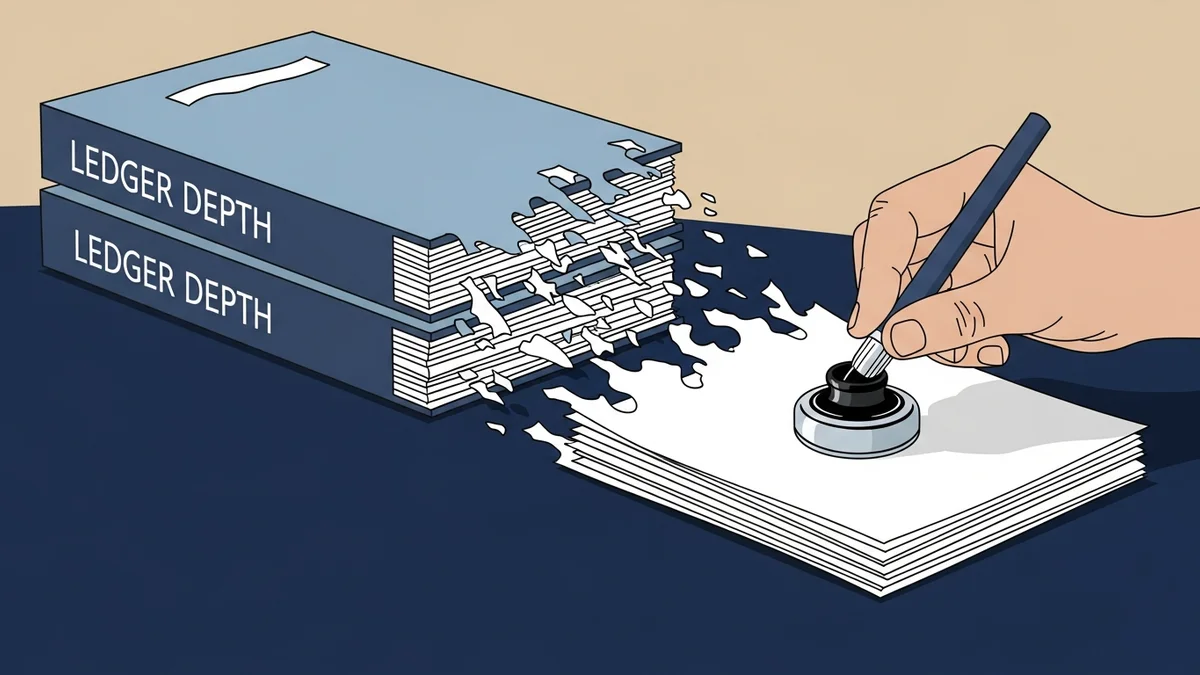
Addy Osmani published a piece this week that completes a model the industry has been assembling in pieces. Margaret-Anne Storey gave us cognitive debt: the eroded shared understanding of why a system works the way it does. Osmani adds the third leg of what he calls Storey’s Triple Debt Model. Alongside technical debt and cognitive debt, there is intent debt: the unwritten, eroded why behind the code itself.
The distinction matters because of a property unique to this third debt. Technical debt and cognitive debt can both be paid down by the agents now writing most of the code. Intent debt cannot. It is the one input that has to come from a human, every time, or it does not exist at all.
What Intent Debt Is
Osmani’s definition is precise. Intent is the goal, the constraint, the rationale that sat in someone’s head when a decision was made. Why this architecture and not the obvious alternative. Why this service waits for that one. Why a field that looks redundant is load-bearing for a compliance rule nobody documented.
When that reasoning stays in someone’s head, or in a Slack thread, or in the memory of a meeting that happened eight months ago, the code carries the decision but not the reason for it. The behavior is preserved. The intent is lost. That loss is the debt.
This sounds adjacent to cognitive debt, and it is, but the two are not the same. Cognitive debt is the erosion of shared understanding across a team. Intent debt is more specific: it is the absence of the original reasoning as a written artifact. You can have a team that broadly understands a system (low cognitive debt) and still have zero record of why a single critical decision was made (high intent debt). The first is about distributed comprehension. The second is about a recoverable record.
Why Agents Cannot Pay It Down
Here is the structural fact that makes intent debt different from the other two. Osmani puts it plainly: agents start every session cold.
A human engineer accumulates context over months. They were in the room. They remember the argument that produced the decision. An agent has none of that. It opens a session with whatever is written down and nothing else. Anything not externalized into a readable artifact simply does not exist for it.
Now follow what each debt means under that constraint.
Technical debt lives in the code. An agent can read the code, see the duplication or the brittle coupling, and refactor it. Agents pay down technical debt routinely; it is one of the things they are best at.
Cognitive debt lives in the gap between code and understanding. An agent can help here too. It can read a tangled module, explain what it does, generate documentation, and rebuild a working mental model from the artifact in front of it. The understanding is recoverable from the code because the code is the source of truth for behavior.
Intent debt is different in kind. The why is not in the code. The code records what the decision was, never why it was chosen over the alternative. An agent reading the code cannot recover intent because intent was never there to recover. So the agent does the only thing it can: it fabricates a plausible reason. It infers an intent that fits the visible behavior, proceeds confidently, and is sometimes catastrophically wrong, because the real reason was a constraint it had no way to see.
That is the asymmetry. For technical and cognitive debt, the code is enough of a source for an agent to do real repair work. For intent debt, the source was a human mind, and if that mind never wrote anything down, there is nothing for the agent to recover. It can only guess.
Plausible-But-Wrong Is the Failure Mode
The danger of intent debt is not that the agent stalls. It is that the agent does not stall. It produces a confident answer built on an invented rationale.
A team removes what looks like a redundant validation step because no comment explains it. The agent agrees: the validation is unreachable, the data is already clean upstream, removing it simplifies the flow. Every part of that reasoning is locally correct. It is also wrong, because the validation existed to catch a malformed payload from a partner integration that fires twice a year. The intent was real. It was just never written down. The agent could not see it, so it reconstructed a story that fit everything visible, and the story was plausible and wrong.
This is why intent debt is more dangerous than it sounds. It does not surface as an error. It surfaces as a confident, clean, well-reasoned change that quietly violates a constraint nobody recorded. The check passes. The tests pass. The reason it existed is gone, and so is the protection it provided.
Externalizing Intent Is a Governance Act
If intent is the one input only a human can provide, then writing it down stops being good hygiene and becomes a governance function. It is the human authority layer made durable. The decision a person made, and the reason behind it, captured in a form an agent reading cold can actually use.
Osmani points to the mechanisms, and they are not exotic. An AGENTS.md file that works as an intent ledger: not a list of commands, but a record of the constraints and rationale that govern the codebase, the things an agent must know before it touches anything. Architectural decision records that capture not just what was chosen but what was rejected and why. Specifications with an explicit definition of done, so the goal is fixed in writing before the agent starts inferring it.
The common thread is that each one moves intent out of a human head and into an artifact. That is the entire move. Intent that lives only in a person is invisible to every agent and erodes with every departure and every forgotten meeting. Intent written into a readable artifact is paid-down debt: visible, durable, and usable by the next agent that starts cold.
This reframes the work. Writing down why is not documentation overhead competing for time against shipping. It is the act of keeping decisions under human authority once agents do the implementing. The team that externalizes intent is governing its agents. The team that does not is delegating the why to whatever the agent decides to invent.
Do This Now
Pick the three most consequential decisions in your current system, the ones where reversing them would be expensive or dangerous, and ask one question of each: if an agent started cold tomorrow, could it recover the reason this was done? If the answer is no, that decision is intent debt sitting on the balance sheet. Write the reason down, in an AGENTS.md ledger or an ADR, including the alternative you rejected and why. You have just paid down the one debt your agents never could.
This analysis synthesizes The Intent Debt (Addy Osmani, Google, June 2026).
Victorino Group helps teams externalize intent into governance artifacts agents can read. Let’s talk.
All articles on The Thinking Wire are written with the assistance of Anthropic's Opus LLM. Each piece goes through multi-agent research to verify facts and surface contradictions, followed by human review and approval before publication. If you find any inaccurate information or wish to contact our editorial team, please reach out at editorial@victorinollc.com . About The Thinking Wire →
If this resonates, let's talk
We help companies implement AI without losing control.
Schedule a Conversation