The Frontier Ships Twice: You Buy One Tier and Apply for the Other
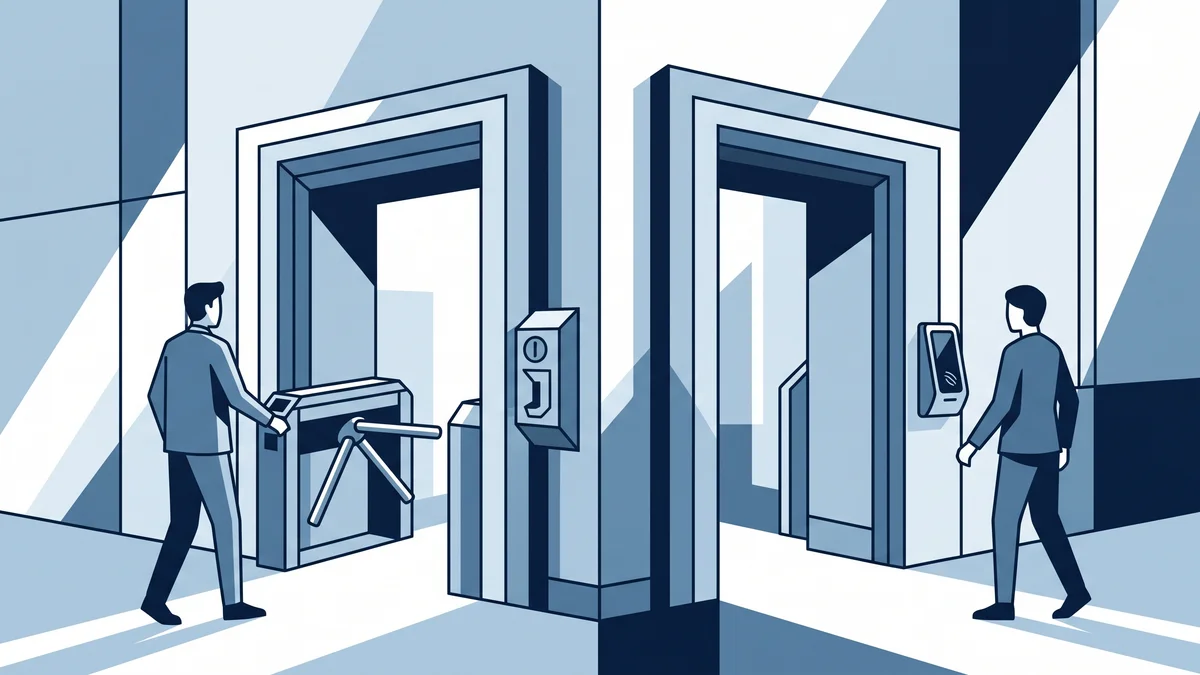
In the first three days of September 2026, Anthropic, Google and OpenAI each shipped their strongest model twice. One copy goes in the store. The other copy goes to organizations that pass a review.
Anthropic released Claude Fable 5.1 publicly and Claude Mythos 5.1 to what it describes as “a small, but growing, set of vetted organizations.” Anthropic’s own framing is that these are “the same model, but with different levels of safeguards.” Google released Gemini 3.8 Flash publicly and Gemini 3.8 Flash Cyber through its Fairwind Program, “only available to trusted defenders.” OpenAI designated GPT-6 Astra at the Critical cybersecurity threshold of its Preparedness Framework, the first model it has placed there, and put the elevated access behind an identity check.
Three labs. One week. The same shape of door.
The Second Copy Has No Published Price
Fable 5.1 and GPT-6 Astra both list at $10 per million input tokens and $50 per million output, which the reporting describes as exactly double Opus 5. Treat that as the current list rate: OpenAI’s pricing page marks promotional pricing, and its footnote names a different model.
Mythos 5.1 has no published price. Gemini 3.8 Flash Cyber has no published price, no public API, and no path for an individual to buy it. The Astra advanced tier has no published price either.
For two years the frontier was a budget question. Pay more, get more. The top of the range is now a status question, and the things you are asked for are a government ID, two hardware security keys, an organization ID, or membership in a category. None of those arrive with a credit card.
We wrote about governance shipping as a product feature when one lab gated one cyber model, and, earlier, about OpenAI acting as a compliance authority. Both of those were readings of a single vendor. Convergence is the new fact, and it changes what a procurement team has to plan for.
The Benchmarked Configuration May Not Be Purchasable
The line that matters most in this whole release cycle is in OpenAI’s small print. Its published capability results reflect Daybreak Blue access rather than the default configuration.
That is a procurement problem before it is a safety story. The published number was produced by a configuration your default API key does not give you. Anyone who has built a business case on a published benchmark score has been comparing against a configuration they may not be able to buy, and in some cases cannot buy at any price.
This is the part that does not fit existing vendor-evaluation practice. Capability evaluation has always assumed that the artifact under test and the artifact you deploy are the same artifact. When a lab splits the model into a public tier and a vetted tier while reporting results from the vetted one, every downstream estimate inherits an asterisk: quality on hard tasks, and whatever internal accuracy threshold you promised the business.
The practical response is short. When you receive a capability claim from any lab, ask which configuration produced it, and ask whether that configuration is available to you specifically. If the answer is a program you would have to apply to, the claim is a forecast about your future access, not a specification of your current one.
Identity Became an IAM Workstream, Not a Purchase Order
The gating mechanics differ by lab, and the differences are operationally significant.
OpenAI’s individual path asks for a government-issued ID and two hardware security keys, plus Advanced Account Security on the account. That is a personal credential attached to a person, with the hardware to match.
Anthropic’s Cyber Verification Program runs a two-business-day review, and approval attaches to an organization ID rather than a user. Today the program covers Opus and Sonnet. Mythos access through it is described as coming, not live. Anthropic also states that its vetted programs are currently limited to US organizations, which today excludes a Brazilian or European entity.
Google requires Fairwind participants to confine the model to security staff and to run multifactor authentication.
Every one of those is work that lands on a team, and none of it lands on the team that usually buys models. Somebody has to own the organization ID and know which employees sit under it. Somebody has to procure and replace hardware keys, and answer in writing which named staff qualify as security personnel. A two-business-day review is fast in absolute terms and slow compared to a credit card, which means the access decision now has a lead time and belongs in a plan.
The nationality constraint deserves its own line in that plan. A legal entity outside the US is excluded from Anthropic’s vetted programs today. It has to decide whether it needs a US entity or a US partner for that class of work. That is a corporate structure conversation, and it moves at the speed of lawyers.
The Public Tier Is the One That Interrupts Long-Running Agents
OpenAI states that its safeguards can flag legitimate work, and names extended-duration agent runs specifically among the cases where that happens. The behavior on flagging depends on the surface: in ChatGPT or Codex you get asked to review, and on the API the task stops.
An interactive product can absorb a review prompt. A human is already sitting there. An unattended agent cannot. If your overnight pipeline is a six-hour run with state held in process memory, a safeguard stop costs the whole run, and you find out in the morning.
None of the three releases came with an SLA discussion around this. Nothing in the coverage says how often legitimate work gets flagged, or whether a stopped API task can be resumed. We flagged capacity scarcity as a vendor risk earlier, and this is the same family of exposure arriving through a different door. Availability now depends on how the safeguards read your workload, and those safeguards sit outside your change control.
Do This Now
Pick your longest unattended agent run and make it resumable this sprint. Concretely: checkpoint state to durable storage at every step boundary, make each step idempotent so a replay does not double-write, add a resume path that restarts from the last checkpoint rather than from zero, and test the whole thing by killing the process mid-run and confirming the agent still finishes. A pipeline that cannot survive a hard stop at an arbitrary point was already fragile. The safeguard behavior just gave it a new way to die, and one you do not control.
While that is in flight, do the cheap part in parallel. Name the person who owns your organization ID with each lab. Write down which of your agent workloads would still work if the vetted tier never became available to you. If your entity sits outside the US, put the structural question on the leadership agenda now rather than after a customer asks why you cannot reach the tier a US competitor can.
The frontier got conditional this month. Conditions have lead times and owners, and both belong on a roadmap before the next capability claim lands on your desk.
This analysis synthesizes Claude Fable 5.1 and Claude Mythos 5.1 (Anthropic, September 2026), Real-time cyber safeguards on Claude Opus and Sonnet (Anthropic), Introducing Gemini 3.8 Flash and 3.8 Flash Cyber (Google, September 2026), The Fairwind Program (Google, September 2026), Path to Astra: critical capabilities and frontier safeguards (OpenAI, September 2026), and The frontier now ships twice. The second copy is not for sale. (Okane Land, September 2026).
Victorino Group helps engineering organizations make unattended agent pipelines survive a hard stop and plan frontier access as an identity workstream. Let’s talk.
All articles on The Thinking Wire are written with the assistance of Anthropic's Opus LLM. Each piece goes through multi-agent research to verify facts and surface contradictions, followed by human review and approval before publication. If you find any inaccurate information or wish to contact our editorial team, please reach out at editorial@victorinollc.com . About The Thinking Wire →
If this resonates, let's talk
We help companies implement AI without losing control.
Schedule a Conversation