Six Pricing Changes in 30 Days. Subscription Plans Are Now Governance Artifacts.
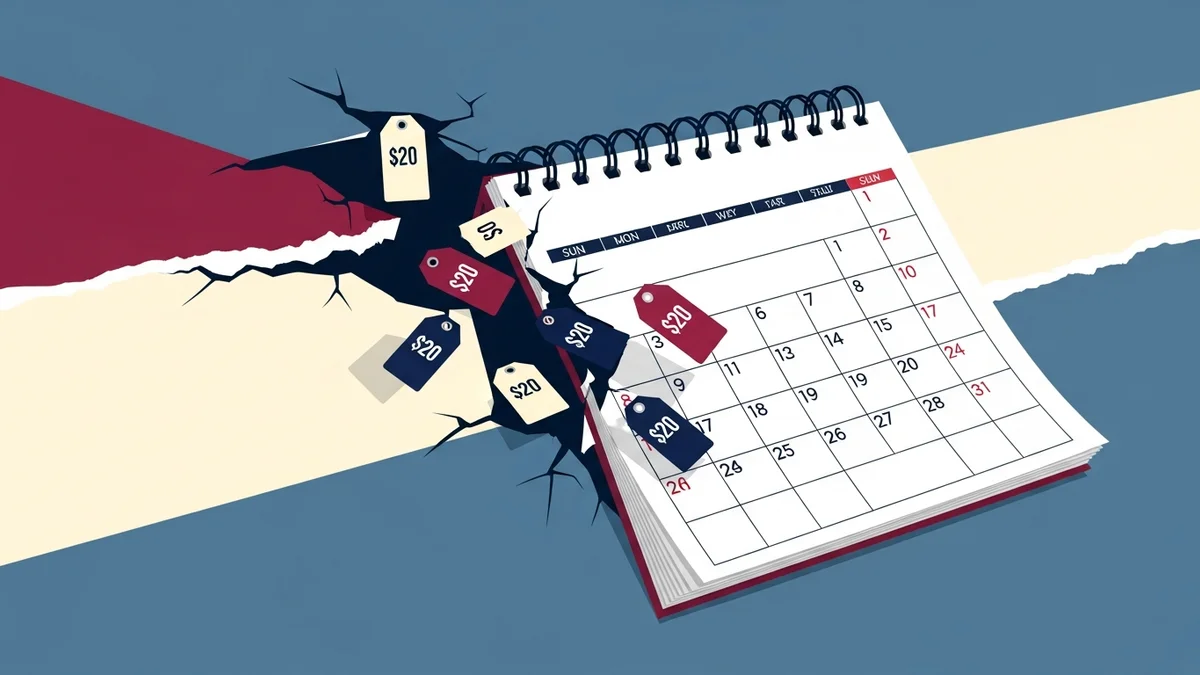
If you signed an annual AI procurement agreement before April 4, you mispriced 2026. Not by a percentage. By a model.
The Microsoft earnings call I wrote about four days ago confirmed, on the record, that per-seat licensing was over. It did not say why the labs were forced to pull the trigger this quarter, instead of next year, instead of in 2027. April is why. In 30 days, the three vendors that matter for AI work (Anthropic, OpenAI, GitHub) shipped six structural changes to subscription pricing. None of them were marketing announcements. All of them were emergency repairs.
This is the catalog. Read it as Part 2 of the Microsoft post.
The April timeline
April 4. Anthropic cut OpenClaw and other third-party agent harnesses from subscription access. The Max plan was being used by power tooling that wrapped Claude into autonomous agents. A subset of those users were burning $1,000 to $5,000 per month in API-equivalent inference while paying $200 for the subscription. Anthropic terminated the access, citing terms of service, and told those users to move to API billing. That is a 5x to 25x subsidy that the lab decided it could no longer absorb.
April 9. OpenAI launched Pro 5x at $100/month for heavy Codex users. The existing $20 tier covered the median developer. The new tier covered the developer who actually finished projects. Five times the price for five times the allowance. The signal: the median pricing had been wrong for the user the product was actually built for.
April 13 to 20. GitHub froze new Copilot Pro trials, then paused all individual signups. Not a feature freeze. A growth freeze. The product was selling faster than the unit economics could support, and the business chose to stop the inflow rather than dilute margins further. Copilot underlying inference costs had roughly doubled year over year against static plan pricing.
April 16. Anthropic’s Opus 4.7 tokenizer increased token usage by 35% per input. Same prompt, same workload, 35% more tokens charged. That is not a price increase you can find on a price page. It is a units change buried in a model release. Anyone whose budget was modeled in dollars per workflow saw the workflow cost rise 35% while the dashboard reported the same per-token rate.
April 21. Anthropic tried to remove Claude Code from the Pro plan, then reversed after backlash. A telling sequence. The lab attempted a unilateral repackaging of what a Pro subscription included, hit user revolt, and rolled back. The reversal does not erase the signal. It confirms that the labs are now testing what they can pull out of subscription tiers in real time, with customers as the experiment.
April 23. OpenAI doubled GPT-5.5 API pricing to $5/$30 per million tokens. The flagship model, on the API where every serious enterprise integration is billed, became 2x more expensive overnight. Anyone with a per-token forecast in their 2026 plan now has a 50% cost overrun baked in before adoption grows.
Six changes. One month. Three vendors. Every one of them load-bearing for a 2026 enterprise AI plan.
Why subscription broke as a model
The traffic curve made it inevitable. OpenAI’s API token throughput went from 6 billion tokens per minute in October 2025 to 15 billion in March 2026. That is a 2.5x increase in five months. Inference costs at Anthropic ran 23% above 2025 projections. The capacity the labs are renting from cloud providers, and the GPUs they are buying from NVIDIA, are not getting cheaper at that pace. Demand is outrunning the supply curve, and the meter is on someone’s bill.
For two years, the meter was on the lab’s balance sheet. A subscription plan at $20 or $200 per month was a marketing instrument, not a unit-economics instrument. It told the user “come build inside our editor; we will absorb the cost while we figure out monetization.” Every lab made the same bet, because every lab needed the developer ecosystem more than it needed margin in 2024.
That bet expired in April. The OpenClaw users were the last straw. When 5% of subscribers consume 10x to 25x what they pay, the only way to keep the price flat is to subsidize the heavy users from the light ones. The light users would not have minded, except the labs were also running negative margins on the subsidy itself. There is no equilibrium in that math. Either the price moves, the access narrows, or the units get redefined. April delivered all three.
The structural lesson buried in the chaos
The deeper failure is not pricing. It is architecture.
Subscription pricing collapsed because business logic was embedded directly in product code. “Pro includes Claude Code” was a hard-coded entitlement check. “Max plan includes 5x usage” was a variable in a billing service. When the lab wanted to remove Claude Code from Pro, it required a code release. When the tokenizer changed and a token meant 35% more work, the price-per-token dashboard kept showing the old number, because the dashboard was reading the wrong layer.
This is what happens when monetization is not a separate layer. The labs are now in the position every SaaS company eventually reaches: the unit they bill for is not the unit the customer values, the conversion rate between them is set by the vendor, and changing the rate requires shipping product. Salesforce solved this years ago by separating entitlements from features. The labs are solving it now, in public, with customer subscriptions as the test environment.
The 2026 procurement consequence
If you negotiated an annual AI commitment in Q1 2026, your contract is now mispriced. Three of the six changes above invalidate assumptions that were standard a quarter ago.
The “Pro tier covers your developers” assumption is dead. Power users now require a separate tier that did not exist when you signed. Either you pay 5x for the people who actually use the tool, or you accept that the cheaper tier will be throttled out from under them.
The “API rates are stable” assumption is dead. GPT-5.5 doubled. Token counts under Opus 4.7 went up 35% per input. A 2026 forecast built in March is already 30% to 50% under-budgeted on the model lines that matter.
The “subscription gives us flexibility” assumption is dead. The Pro tier no longer guarantees access to the agent harness your team built around it. The lab can remove the harness, change the tokenizer, or cut third-party integrations, and the subscription terms allow it. Subscription access is now a vendor convenience, not a customer entitlement.
What to do this quarter
The same three moves I argued for in the Microsoft piece, with one addition.
Instrument the burn at the workflow level, not the seat level. A 35% tokenizer change should be visible in your monitoring within a week of release, not at quarter-end when the invoice arrives. If your AI cost dashboard reads vendor numbers instead of measuring your own, you will miss every change that lives below the per-token line.
Re-bid every annual commitment that was signed before April 4. The vendors will not volunteer to reopen. They do not have to. But every renewal cycle this year is now a re-bid, and the bid should price against the curve you actually use, not the tier the vendor is willing to sell you. Your leverage is the data you bring to the table.
Build the kill switch on the metered tools, the unmetered tools, and the tools that switched between them mid-contract. April just demonstrated that any of the three categories can change overnight. The kill switch is not a luxury for high-spend teams; it is the default control surface for any AI tool that touches your stack.
And the addition: model the next April. The labs are now in continuous repricing mode. Six changes in 30 days is not a one-time event. It is the new cadence. A 2026 procurement plan that does not include a quarterly repricing review will be wrong by the second quarter.
The honest summary
Subscription pricing for AI tools was never a price. It was a subsidy with a marketing wrapper. April was the month the wrapper came off. The labs are now charging closer to cost, repackaging in real time, and treating subscription tiers as governance artifacts they can rewrite when the unit economics demand it.
Procurement teams that built their 2026 plan on stable subscription tiers are going to be wrong, in writing, for at least three quarters. The teams that price AI on the cadence the labs actually move at are going to spend the same year getting their numbers right.
The earnings call already happened. April already happened. The question for May is whether your contract template caught up.
This analysis synthesizes The April Every AI Plan Broke (The Financial Engineer, May 2026).
Victorino Group helps procurement teams price AI with the cadence the labs actually move at. Let’s talk.
All articles on The Thinking Wire are written with the assistance of Anthropic's Opus LLM. Each piece goes through multi-agent research to verify facts and surface contradictions, followed by human review and approval before publication. If you find any inaccurate information or wish to contact our editorial team, please reach out at editorial@victorinollc.com . About The Thinking Wire →
If this resonates, let's talk
We help companies implement AI without losing control.
Schedule a Conversation