The Operations Response: Amazon, Kubernetes, and the Week AI Hit Production Reality
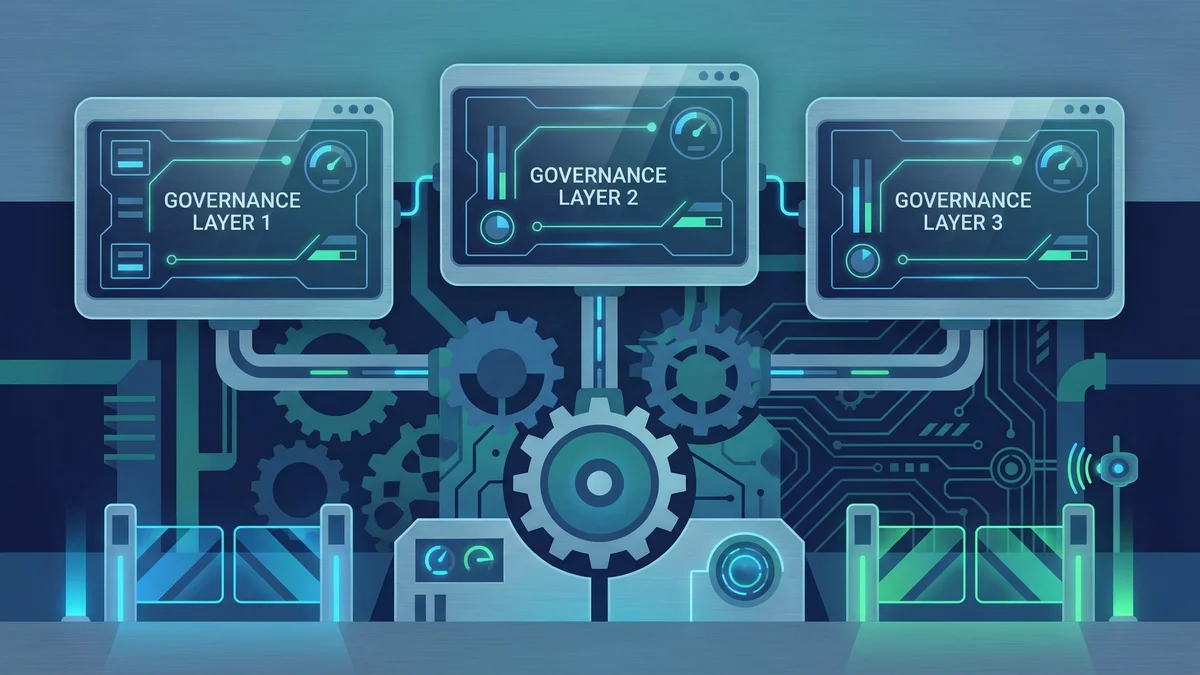
Three organizations published three different responses to the same problem in the same week. Amazon told senior engineers to sign off on all AI-assisted code changes. The Kubernetes project announced a working group to build AI governance into the Gateway API specification. A six-person startup demonstrated that 100% test coverage is not perfectionism but operational necessity when agents write your code.
None of them coordinated. All of them converged on a single insight: the controls that worked for human-written software do not work for AI-assisted software. New ones are needed. The interesting part is where each organization chose to build them.
Amazon: The Reactive Response
Dave Treadwell, Amazon’s SVP of Stores Engineering (and a former Microsoft engineering executive), sent an email to employees in early March that the Financial Times obtained. The language was blunt: “the availability of the site and related infrastructure has not been good recently.” He cited a “trend of incidents” with “high blast radius” and listed “Gen-AI assisted changes” among contributing factors.
The policy response: junior and mid-level engineers now require senior engineer sign-off on all AI-assisted changes. A large group of engineers was summoned for a mandatory “deep dive” session called TWiST (This Week in Stores Tech).
The incidents behind this policy are concrete. Amazon’s main shopping site went down for nearly six hours due to an “erroneous software code deployment.” Separately, AWS’s cost calculator suffered a thirteen-hour interruption after Kiro, Amazon’s internal AI coding tool, reportedly deleted and recreated an entire environment. As we examined in The Operations Discipline Gap, the Kiro incident revealed that permission models designed for human engineers break down when applied to AI agents that interpret scope differently.
Here is what makes Amazon’s response worth examining closely. It is a human-layer control applied to a machine-speed problem.
Senior sign-off works when the volume of changes is manageable and the reviewer can meaningfully evaluate each one. It is the “in-the-loop” model described in On-the-Loop: What Companies Running AI Agents Actually Do Differently, where a human gates every artifact before it ships. For Amazon’s immediate situation (production outages demanding immediate intervention), it is a rational choice. Stop the bleeding first.
But it has a shelf life. If AI tools continue accelerating the rate of code production, senior engineers become bottlenecks. The review queue grows. Pressure to rubber-stamp builds. The control degrades into theater. Amazon’s policy is a tourniquet, not surgery.
A complicating factor deserves honesty. Amazon eliminated 16,000 corporate roles in January 2026. Engineers inside the company report higher Sev2 incident frequency linked to those cuts. Amazon disputes the connection. Both things can be true: fewer experienced engineers reviewing more AI-generated code is a compounding risk, regardless of which variable you attribute it to.
Kubernetes: The Structural Response
Two days before the Amazon email leaked, the Kubernetes project announced the AI Gateway Working Group. Where Amazon applied a human control to an immediate crisis, Kubernetes is engineering controls into infrastructure that does not exist yet.
The scope is ambitious. The working group is designing declarative APIs for two categories of AI workload networking.
Payload Processing handles what flows through the system: prompt injection filtering, content filtering, semantic routing, intelligent caching, RAG integration, and ordered processing pipelines. These are governance functions encoded as API specifications, not policies written on a wiki page.
Egress Gateways handle how AI workloads connect to external providers: managed authentication for OpenAI, Vertex AI, and Bedrock; regional compliance routing; multi-provider failover; TLS policy management. These are the same operational concerns described in The Operations Tax, but addressed at the infrastructure layer rather than the application layer.
The working group builds on the existing Gateway API specification, which already handles networking concerns like traffic routing and load balancing for traditional workloads. The bet is that AI workloads need the same kind of standardized, declarative governance that HTTP workloads got a decade ago.
A critical caveat: this is early. The proposals are in active development. There are no production implementations. The founding members (Keith Mattix, Nir Rozenbaum, Morgan Foster, Flynn) plan to present at KubeCon Europe in Amsterdam later this month. Designing is not shipping, and the history of Kubernetes specifications includes long gaps between announcement and adoption.
Still, the direction matters more than the timeline. When the infrastructure layer starts encoding AI governance primitives, it signals that the industry has moved past the question of whether AI needs operational controls. The question is now where in the stack those controls belong.
Code Quality as Operations Infrastructure
Steve Krenzel runs LOGIC Inc., a six-person team that has arrived at a conclusion most engineering organizations have not internalized: when agents write your code, code quality stops being a developer preference and becomes operational infrastructure.
His numbers: 10,000+ test assertions running in about one minute (with caching). 100% code coverage as a minimum baseline, not a stretch goal.
The interesting insight is what happens at 100% coverage when agents are writing code. Krenzel describes it as a “phase change.” Below 100%, every uncovered line could be old code nobody touched, dead code nobody cleaned up, or new code nobody tested. The ambiguity makes coverage metrics noisy. At 100%, that ambiguity disappears. Every uncovered line is definitively a recent addition that needs tests. The signal becomes clean.
This matters for agent operations specifically. An agent that writes code against a codebase with 70% coverage cannot distinguish “untested because it is legacy” from “untested because it is new.” An agent working against 100% coverage gets an unambiguous signal: if your new code is uncovered, the build fails. No interpretation required. No human review of coverage reports needed.
Krenzel’s architecture choices reinforce the point. Semantic file naming so agents can find relevant code without searching. Small, well-scoped files so agents can read entire modules into context. Fast ephemeral environments so agents can test changes without waiting. End-to-end TypeScript typing so agents get compile-time feedback on structural errors.
Each of these is a standard engineering practice. None of them are new. What is new is the reason they matter. They are not developer conveniences. They are agent affordances. The codebase becomes the control surface.
This connects directly to the on-the-loop model. Krenzel’s team does not review every line an agent writes. They built the test suite, the type system, the CI pipeline, and the coverage rules that review it for them. The guardrails become the leverage point. The human writes the guardrails. The agent writes the code. The guardrails validate the code. That loop either works at machine speed or it does not work at all.
Scale matters here. LOGIC is six people. Amazon is hundreds of thousands. The practices Krenzel describes become harder to implement as codebase size, team count, and legacy debt increase. But the direction is the same: encode quality standards into automated systems that agents execute against, rather than relying on human reviewers to catch problems after the fact.
Three Layers of the Same Response
These three responses are not in conflict. They are layers.
Layer 1: Human gates. Amazon’s senior sign-off. Immediate, high-friction, effective for acute risk. Does not scale. Every organization starts here when AI-assisted code causes incidents. It is the correct first response and the wrong permanent solution.
Layer 2: Infrastructure standards. Kubernetes AI Gateway. Medium-term, designed for interoperability, addresses the networking and compliance layer. Takes years to mature but creates shared primitives that the entire industry can build on. The governance equivalent of how HTTP/2 standardized connection multiplexing rather than leaving every application to implement its own.
Layer 3: Codebase as control surface. Krenzel’s approach. The most immediate operational lever for individual teams. Requires no industry standards body, no policy mandates. Requires engineering discipline and investment in test infrastructure.
Most organizations will need all three, applied in sequence: human gates now, codebase controls soon, infrastructure standards as they mature.
The Uncomfortable Implication
The convergence this week points to something the industry has been reluctant to say directly. AI coding tools shipped faster than the operational frameworks needed to run them safely. That sentence is not controversial in hindsight. Everyone who has managed a production incident caused by AI-generated code already knows it.
What is less obvious is the structural response. Amazon’s sign-off policy is a management control. Kubernetes’s working group is an infrastructure control. Krenzel’s test coverage is an engineering control. All three are operations controls applied to a new category of input, not AI controls in any meaningful sense.
This is the pattern we identified in The Operations Tax: the cost of running AI in production is not the tokens or the compute. It is the governance, validation, and oversight infrastructure that production demands and demos do not. Amazon learned this through outages. Kubernetes learned it from watching organizations struggle with AI workload networking. Krenzel learned it from building agent workflows that needed deterministic quality signals to function.
The organizations that treat this week’s news as “Amazon had some outages” are missing the signal. Three independent actors, at three different scales, in three different parts of the stack, all building the same thing: operational controls for AI-generated artifacts. That is not a coincidence. It is convergence toward a discipline that does not have a name yet but will within the year.
The question for every engineering organization is not whether to build these controls. It is whether to build them before or after the outage that forces the issue.
This analysis synthesizes Financial Times/Ars Technica’s reporting on Amazon’s AI code review mandate (March 2026), the Kubernetes AI Gateway Working Group announcement (March 2026), and Steve Krenzel’s analysis of code quality as agent infrastructure (March 2026).
Victorino Group helps enterprises build AI operations frameworks before the outage forces them to. Let’s talk.
All articles on The Thinking Wire are written with the assistance of Anthropic's Opus LLM. Each piece goes through multi-agent research to verify facts and surface contradictions, followed by human review and approval before publication. If you find any inaccurate information or wish to contact our editorial team, please reach out at editorial@victorinollc.com . About The Thinking Wire →
If this resonates, let's talk
We help companies implement AI without losing control.
Schedule a Conversation