Chat Is Dead: When the Agent Acts, Governance Leaves the Chat Box
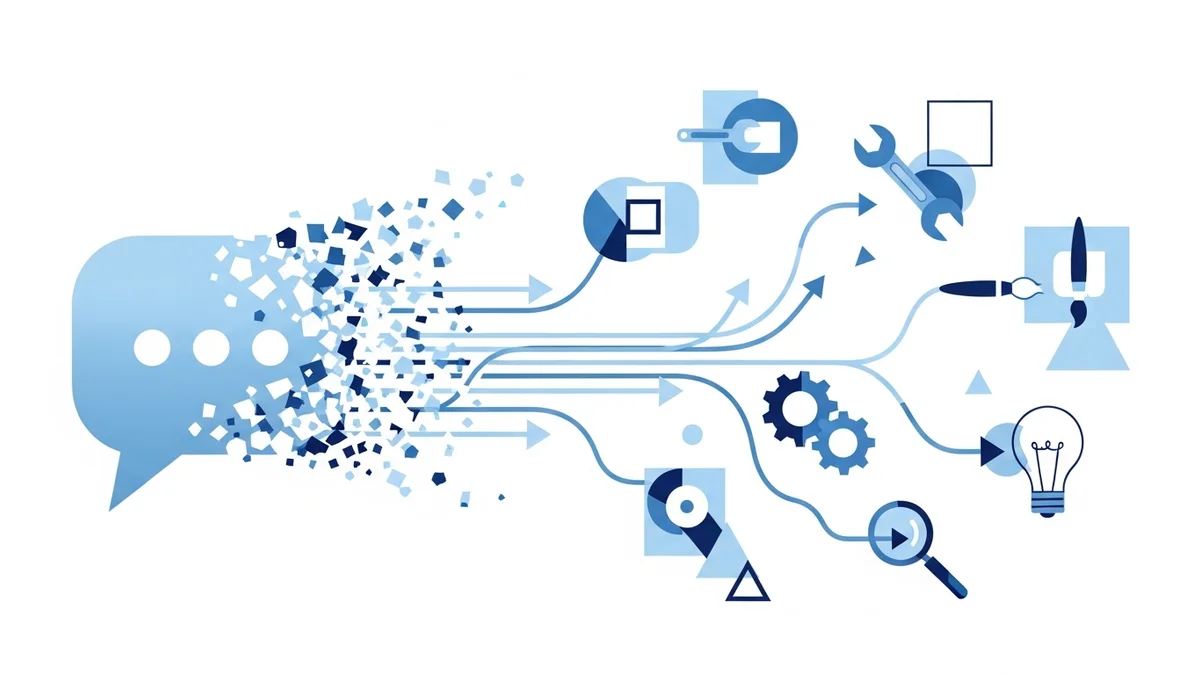
According to reporting from the Financial Times, picked up and analyzed by M.G. Siegler at Spyglass on June 7, 2026, OpenAI is rebuilding ChatGPT from the inside out. The chatbot you know is being reframed as a super-app: a single surface where agents book your travel, manage your calendar, and run multi-step tasks instead of answering questions one at a time. The framing inside the company, per a senior employee quoted via the FT, is blunt. “Chat is dead.”
That phrase is a product strategy. It is also a governance event, and most enterprises have not noticed.
What “Chat Is Dead” Actually Means
The FT scoop, which Siegler builds on, cites more than a dozen current and former OpenAI employees describing a redesign that surfaces Codex as a core product alongside image generation and partner apps like Canva and Booking.com. The stated destination, in the words of OpenAI product lead Thibault Sottiaux, is “a personal agent capable of helping you across everything,” spanning mobile, desktop, web, and voice. Rollout is described as coming “in weeks.”
The scale behind this is large. Unofficial estimates put ChatGPT near 1 billion monthly active users, with Google Gemini reportedly around 900 million. Treat both numbers as unofficial; neither company confirmed them. But the direction is not subtle. The two largest consumer AI surfaces on earth are both racing toward the same product: not a place you talk to, a thing that acts on your behalf.
When the interface stops being a conversation and becomes an actor, something quiet breaks.
The Checkpoint Nobody Designed On Purpose
Think about how a chatbot governs itself today. You ask a question. The model drafts an answer. You read it. Then you decide what to do with it. Copy it into an email. Paste it into a contract. Ignore it. That final human read, the moment between the model’s output and any real-world consequence, is a control surface. It was never labeled as one. It exists because chat is a draft medium. Nothing happens until a human moves the output somewhere it matters.
Call it review-before-send. It is the last place a person checks the work before it touches a customer, a ledger, or a calendar.
An agent that books the flight removes that step by design. There is no draft to review, because the booking is the output. The model does not propose the calendar change and wait. It makes the change. The pause where a human used to catch the hallucinated date, the wrong vendor, the double-charged card, that pause is gone. Not weakened. Gone. It was a side effect of the chat medium, and the super-app is built to delete it.
This is the same structural shift we wrote about when interfaces became disposable, but sharper. There the concern was users skipping your UI to hit your API through an agent. Here the agent vendor is removing the review surface from inside their own product, for a billion users at once.
Governance Cannot Live In The Conversation Anymore
If the chat box is no longer where consequences originate, then guarding the chat box guards nothing. Prompt filters, content moderation on responses, “are you sure” language in the model’s reply: all of these assume a human stands between the words and the world. Remove that human and you are moderating a transcript while the action happens somewhere your controls cannot see.
Governance has to relocate. It moves to three places, none of them the conversation.
Authorization boundaries. Before the agent acts, what is it allowed to touch? An agent with your calendar token, your travel account, and your corporate card is one prompt away from spending money. The control is not “did the model say something reasonable.” The control is “does this agent hold the credential to do this thing at all, for this user, right now.” Scope the tokens, not the sentences.
Blast-radius limits. When the agent does act, how much can go wrong in one step? A human booking a flight makes one mistake at a time. An agent looping over a task list can make a hundred before anyone notices. Caps on spend per action, rate limits on irreversible operations, and mandatory human confirmation for high-consequence steps are not friction. They are the new confirmation dialog, moved from the UI to the tool layer.
Audit on action, not on answer. The log that matters is no longer what the agent said. It is what the agent did. Which tool it called, with which arguments, on whose authority, with what result. If your compliance story depends on a chat transcript, you are recording the narration and missing the events.
This is the control plane question, applied to the most popular consumer product in the world. The agent is the actor. The tools are the verbs. Governance lives where the verbs execute.
The Lock-In Underneath The Convenience
There is a second reason this matters beyond the missing checkpoint. The vision is one personal agent across everything. One agent that knows your calendar, your travel, your documents, your purchases, your voice. That concentration is the product’s whole appeal. It is also a single point of dependency that no enterprise has a procurement category for yet.
When ten employees use ten chatbots to draft text, the vendor relationship is shallow and swappable. When one agent holds the credentials to act across your stack, switching becomes a migration, not a preference. The convenience and the lock-in are the same feature. The more the agent can do, the harder it is to take its hands off the controls.
Enterprises should price that in now, while the agent is still mostly drafting and only beginning to act.
Do This Now
Inventory where agents already act, not just answer. Find every place an AI surface can take an action with real consequence: send, book, pay, write, delete. Those are your new control points. The ones that only return text can wait.
Move your controls from response to authorization. Stop relying on the model saying the right thing. Decide what each agent identity is allowed to touch, and enforce it at the credential and tool layer. An agent that cannot reach the corporate card cannot misuse it.
Cap the blast radius before you grant autonomy. For every action an agent can take, set a limit on how much one mistake can cost: spend caps, rate limits, mandatory confirmation for irreversible steps. Build the new confirmation dialog into the tool layer, since the old one in the chat box is disappearing.
Audit the verbs, not the words. Log every tool call with identity, arguments, authority, and result. When the super-app arrives “in weeks,” you want a record of what your agents did, not a transcript of what they said.
The chatbot was governable because it only ever drafted. The super-app acts. Move your governance to where the action happens, or govern nothing at all.
This analysis synthesizes ChatGPT is Dead, Long Live ChatGPT (Spyglass, M.G. Siegler, June 2026).
Victorino Group helps enterprises move governance from the chat box to the agent’s action layer. Let’s talk.
All articles on The Thinking Wire are written with the assistance of Anthropic's Opus LLM. Each piece goes through multi-agent research to verify facts and surface contradictions, followed by human review and approval before publication. If you find any inaccurate information or wish to contact our editorial team, please reach out at editorial@victorinollc.com . About The Thinking Wire →
If this resonates, let's talk
We help companies implement AI without losing control.
Schedule a Conversation