Fifty percent less token spend. Same task. No new model. No new pricing tier. No procurement review. Just better context engineering.
That is the headline from Callstack’s April 2026 writeup on their agent-device CLI, the tool they built so AI agents can drive mobile devices for automated testing. The team cut LLM token usage by more than half. The mechanism is almost boring when you read it. They stopped sending screenshots.
What they actually did
The obvious way to let an agent control a mobile app is to give it eyes. Screenshot the screen, pass the image to the model, let it reason about where to tap. It works. It is also wildly expensive. A single mobile screenshot encodes as thousands of vision tokens, most of them describing pixels the agent does not care about — background gradients, icon shadows, the system clock.
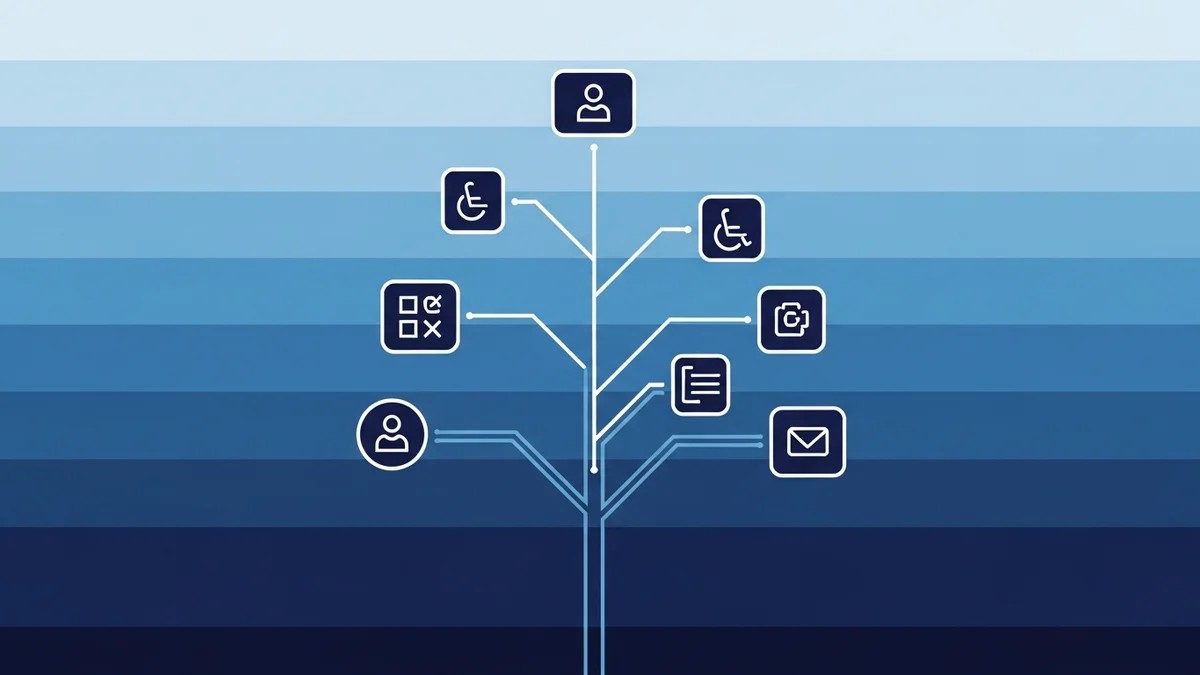
Callstack replaced the screenshot with a trimmed accessibility-tree snapshot. Every mobile OS already maintains a structured representation of the UI for screen readers: buttons, labels, positions, states. It is text. It is small. And — critically — Callstack did not just dump the full tree. They aggressively pruned it to only the elements visible on screen. No off-viewport nodes. No collapsed sections. No invisible containers that exist only for layout.
The signal-to-noise ratio went up. The token bill went down. The agent got better at the task because the context window stopped being a landfill.
The governance lesson hiding in the engineering note
Cost governance in AI has two failure modes.
The bureaucratic path is the one most enterprises default to. Usage committees. Pre-approval gates. Model-selection matrices. Bill-shock PTSD from the first Anthropic invoice. Policies that slow work without actually lowering spend, because the spend is dominated by a few high-frequency workflows nobody is willing to audit.
The engineering path is what Callstack just demonstrated. You do not govern cost by adding approvers. You govern cost by designing context deliberately. Every token you send is a decision. Most teams are not making the decision — they are defaulting to “send everything” because it is the path of least resistance for the developer building the agent.
Screenshots are the archetype of lazy context. They feel rich. They are easy to capture. They let the engineer ship the agent in an afternoon. They also encode the same three pixels of chrome on every single call, forever, at vision-token prices. Nobody notices until the monthly bill arrives.
Callstack’s fifty percent is not a marketing number. It is the gap between the default path and the deliberate path. That gap exists in almost every agent workload running in production today.
Context engineering is cost governance with a different name
As we explored in 25 Hours, 13 Million Tokens: What a Codex Marathon Reveals About Agent Memory, the breakthrough in long-horizon agent work is rarely the model. It is the memory architecture. The Codex sprint worked because someone sat down and designed what the agent would see and forget. Same discipline, different surface.
It is the same thesis from The Governance Inflection Point: when frontier models get cheap enough to run everywhere, the cost conversation moves up the stack. It stops being “which model” and starts being “what do we feed it.” The teams that internalized this are already shipping cheaper agents than teams who are still negotiating discounts.
And it is the same principle behind Your Docs Have Two Audiences Now. One of Them Counts Tokens.. The structure you expose to an agent is an economic decision. A bloated doc, a bloated DOM, a bloated screenshot — all three are the same mistake wearing different outfits.
Anywhere you are currently blasting screenshot-bulk data into an LLM, you are underfunding context design. The cheapest cost control is the one you are not yet doing.
One caveat, said plainly
Do not copy Callstack’s fifty percent into your slide deck. Their number is specific to mobile testing, where accessibility trees happen to be a near-lossless replacement for pixels. Your domain may not have an equivalent. A design tool cannot replace the canvas with a tree. A medical imaging pipeline cannot replace a scan with metadata.
Generalize the method, not the number. The method is: find the lazy context in your agent, model what a deliberate version would look like, measure the delta. That is it.
The close
Teams that treat context as a budget line — a thing to design, review, and optimize — are already ahead of teams that treat it as exhaust from building the agent. The first group is shipping cheaper systems every quarter. The second group is writing memos about why their AI spend tripled.
Callstack’s post is engineering notes. The lesson is operating discipline. If your agent is still sending screenshots where a tree would do, your cost problem is not a pricing problem. It is a design problem. And design problems have the nice property that fixing them makes everything else work better at the same time.
This analysis is based on How We Optimized Agent-Device for Mobile App Automation by Callstack (April 2026).
Victorino Group helps teams treat context engineering as cost governance. Let’s talk.
All articles on The Thinking Wire are written with the assistance of Anthropic's Opus LLM. Each piece goes through multi-agent research to verify facts and surface contradictions, followed by human review and approval before publication. If you find any inaccurate information or wish to contact our editorial team, please reach out at editorial@victorinollc.com . About The Thinking Wire →
If this resonates, let's talk
We help companies implement AI without losing control.
Schedule a Conversation